
Heathrow Flight Delays and Cancellations — What's Causing Them and What You Need to Do
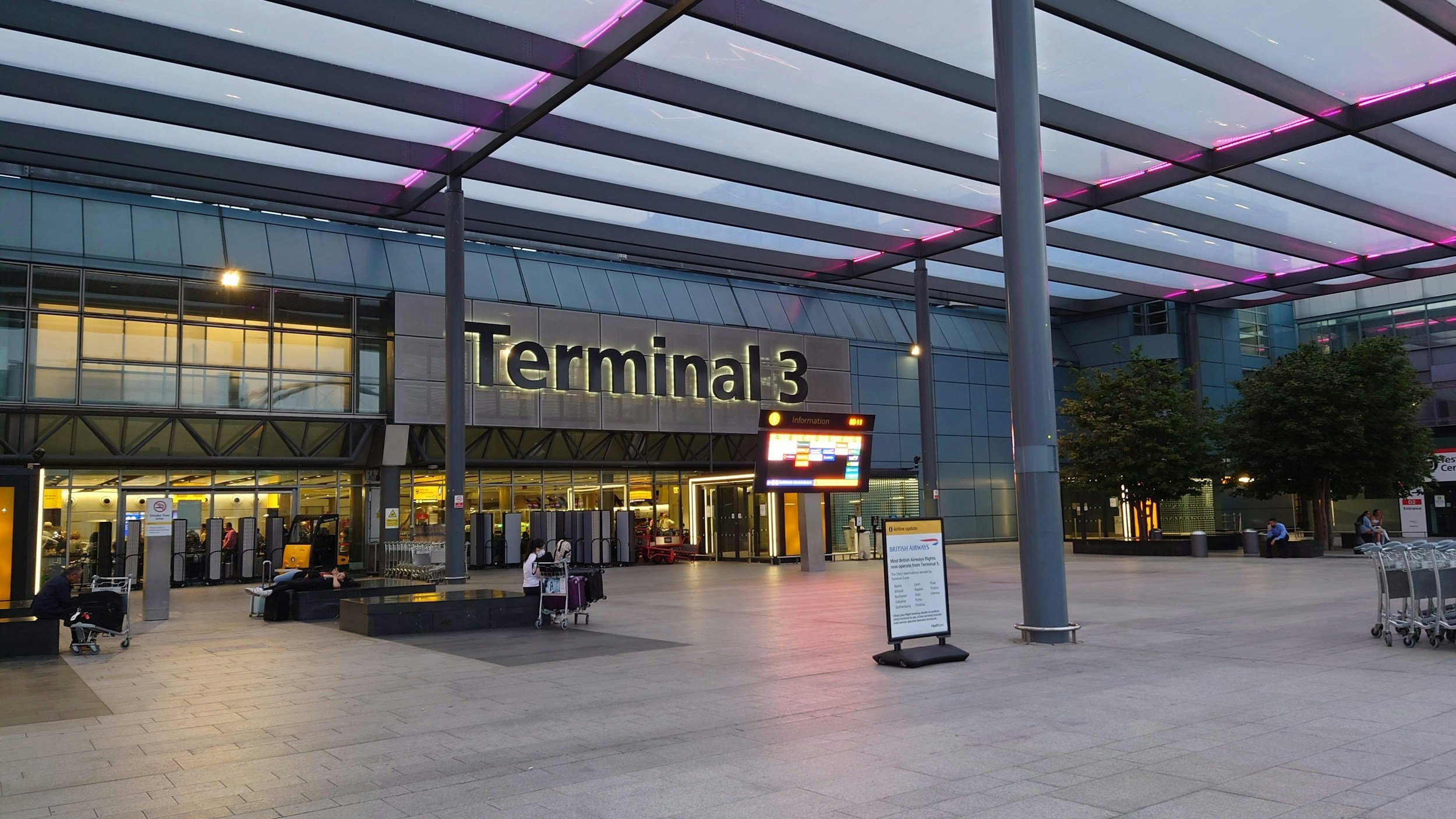
The disruption running through Heathrow is not random. It is structural — and it is not going away quickly.
If your flight through Heathrow has been delayed or cancelled, you are not unlucky. You are part of a pattern that has been building throughout this year and shows no sign of resolving before the summer travel peak intensifies further. London Heathrow recorded 285 flight delays and 15 cancellations in a single day in early June, with British Airways alone accounting for over 60% of all disruptions. The summer has exposed critical stress points in the UK aviation network, and Heathrow sits at the centre of them.
This guide explains what is actually driving the disruption, what your rights are under UK law, and — critically — what to do about your onward travel if your flight is delayed or cancelled and you need to get to or from the airport without relying on trains that may also be affected.
Book a Heathrow Transfer with Free Flight Tracking
Why Heathrow delays are so severe right now
Heathrow flight delays in this period are not being caused by a single problem. They are the result of several pressures converging at the same time, at an airport that has almost no slack to absorb any one of them.
Runway capacity at the legal limit
Heathrow is operating at 99% or above of its legal runway cap. The airport operates under a government-imposed limit on the number of flight movements per year — a constraint that has been in place since the early 1970s. At peak summer volumes, the airport has no meaningful buffer. A single significant delay — one wide-body aircraft held on the taxiway, one slot missed due to a late crew — creates a cascade that can take hours to absorb.
Airlines and passenger groups have warned that a delayed terminal overhaul is compounding congestion issues, with knock-on effects for travellers that will continue well beyond this season. The airlines operating at Heathrow are publicly critical of the situation. The passengers are the ones absorbing the consequences.
EES biometric processing adding queue time at borders
Since going live on 10 April, the EU's Entry/Exit System (EES) has added a new friction point at every Heathrow arrival hall. Non-EU passengers — including British, American, Canadian, and Australian travellers — face 45 to 90 minutes of passport processing time due to EES biometric requirements, compared to 15 to 20 minutes before the system launched. EES kiosks are only partially deployed at Heathrow, meaning a significant proportion of processing is still done manually at desks.
For passengers arriving into Heathrow on an already-delayed flight, this means the wait does not end when you land. It continues in the arrivals hall.
British Airways structural strain
British Airways is under unprecedented operational pressure — IT system issues, crew scheduling depth problems, and the legacy of route suspensions to Gulf destinations earlier in the year have left the carrier without the resilience to absorb disruption at its primary hub. As Heathrow's dominant operator, when British Airways struggles, Heathrow airport disruption spreads across the entire terminal network regardless of which airline you are flying with. Missed slots, held gates, and delayed baggage handling affect every carrier on the airfield.
The Elizabeth line and Heathrow train links
In late May, flooding affected signalling equipment at Heathrow Terminals 2 and 3 station, shutting all train services in and out of the airport and prompting urgent advice for travellers to seek alternative transport. The Elizabeth line, though transformative for Heathrow access since its opening, runs through the same vulnerable infrastructure points as the older Heathrow Express. When the rail link fails — for flooding, signalling faults, or strike action — the road network around the airport becomes the only option for the hundreds of thousands of passengers who had been relying on the train.
Summer volume pressure
Air traffic forecasts indicate that flight volumes across Europe will continue to climb through the summer, edging beyond last year's levels and pushing the network closer to its capacity limits. Heathrow, which is already at or above its legal runway cap, has nowhere to put this additional demand. The disruption pattern documented since March is likely to intensify, not improve, through July and August. The Traveler
What to do if your Heathrow flight is delayed or cancelled
Step 1 — Check the airline app, not the departure board
The departure board at Heathrow updates more slowly than the airline's own app, which pulls directly from the carrier's operational system. Download the app for your airline before you travel and enable push notifications. For British Airways delays at Heathrow, the BA app will usually show a delay notification before the departure board is updated.
Step 2 — Know your rights under UK261
Under UK261 (the domestic equivalent of EU261 retained after Brexit), airlines are legally required to provide a Right to Care — including meals, refreshments, and hotel accommodation — for significant delays, regardless of whether the cause is weather or airline fault.
The specific thresholds:
Delays of 2 hours or more on short-haul flights (under 1,500km): the airline must provide meals and refreshments
Delays of 3 hours or more on medium-haul flights: meals, refreshments, and two free phone calls or emails
Delays of 4 hours or more on long-haul flights: all of the above, plus hotel accommodation if an overnight stay is required
Cancellations: you are entitled to a full refund or rerouting to your destination at the earliest opportunity
Keep all receipts. If the airline fails to provide vouchers and you purchase food or accommodation out of pocket, you can claim these expenses back. Document everything in writing — ask the airline's desk for written confirmation of the delay and its stated cause.
For Heathrow delay compensation specifically, weather-caused delays (classified as "extraordinary circumstances") do not typically attract the cash compensation of £220–£520 per person that applies to delays caused by airline fault. However, the Right to Care obligations apply in all cases. Airlines frequently misrepresent this — the duty to feed and accommodate you does not depend on the cause of the delay.
Step 3 — Check your travel insurance
Most comprehensive travel insurance policies cover delays over a threshold (typically 4–6 hours), cancellations, and missed connections caused by carrier disruption. Check your policy documents for the specific terms and make sure you have the insurer's emergency contact number saved before you travel.
Step 4 — Rebook proactively, do not wait
Spring and summer 2026 have pushed flights close to full, making rebooking genuinely difficult — some passengers have been rerouted through secondary hubs or different countries, while others have delayed their trip altogether rather than risk getting stuck. If you are facing a cancellation, use the airline app or website to explore rebooking options immediately — do not wait in the customer service queue, which will be very long. Alternatives via another carrier or via a different European hub are often available and can be booked through the airline's own system under your existing entitlement to rerouting. AirHelp
How Heathrow disruption affects your airport transfer — and what we do about it
For passengers travelling to or from Heathrow by private transfer, flight delays create a specific problem: your driver is booked for a time that may now be several hours out of date.
At UK Airport Transfer Services, every arrival booking is covered by free flight tracking throughout. We monitor your flight from departure — not from the scheduled landing time. If your flight is delayed by an hour, two hours, or more, your driver's arrival time is adjusted automatically. You do not need to call us. You do not need to manage the situation from the departure gate. We track it and we move accordingly.
This matters most when delays compound. A two-hour Heathrow delay combined with a 45-minute EES queue is a three-hour wait from your original planned arrival. Without flight tracking, that is three hours of a driver waiting in the short-stay car park at significant cost — or worse, a driver who has left because the wait exceeded what was agreed. With flight tracking, your driver simply arrives when you actually land and clear customs.
We also include 30 minutes of free waiting time from when your flight lands — the window within which the vast majority of passengers clear arrivals at Heathrow. For passengers who need additional time — if customs queues are unusually long, or if luggage is delayed — call us on 0208 129 2660 and we will hold your driver.
Get a Fixed Price Quote for Your Heathrow Transfer
If the trains to Heathrow are also disrupted
When Heathrow's rail links are affected — as happened with the May flooding at Terminals 2 and 3 — the Elizabeth line and Heathrow Express both become unavailable simultaneously, because they share infrastructure at the airport end. The Piccadilly line is a separate system and generally remains operational, but it is slower, runs through many stops, and is not a realistic option for passengers with significant luggage on a time-sensitive journey.
Private transfer is the one Heathrow transport option that does not share infrastructure with the rail network. A vehicle departing from your address in London and travelling to the airport via the M4 or A4 is not affected by signalling failures at Heathrow Central station. It is also not affected by tube strikes, rail strikes, or flooding. For passengers whose flights depart early in the morning — before the Elizabeth line's first service — or who are travelling with families and luggage, the road is often the more reliable option regardless of what the trains are doing.
Heathrow terminals most affected by current disruption
The disruption is distributed across all four terminals, but the pattern is consistent:
Terminal 5 — British Airways. As the dominant carrier and the one facing the most structural strain, T5 is where the delays most frequently originate. BA's position as the hub operator means its delays propagate to other carriers via shared gates and ground handling.
Terminals 2 and 3 — Star Alliance and oneworld long-haul. The EES biometric processing bottleneck most significantly affects arrivals at T2 and T3, where the international long-haul carriers bring the highest proportion of non-EU passengers requiring full biometric registration. Arrivals queues here have been running 45–90 minutes longer than before April 10.
Terminal 4 — Gulf and international carriers. Less affected by BA's structural issues, but not immune from the knock-on effects of a congested airfield and shared ground handling resources.
We cover meet and greet arrivals at all four Heathrow terminals, with drivers waiting inside the arrivals hall and your flight tracked from the moment it departs. If your terminal changes — which happens during significant disruption — call us on 0208 129 2660 and we will redirect your driver.
A note on delays affecting onward transfers to other destinations
Many passengers connecting through Heathrow are not beginning or ending their journey in London — they are passing through on the way to a UK destination, or using Heathrow as a connection point before taking onward ground transport to Southampton, Oxford, Brighton, or elsewhere.
If your Heathrow connection is affected and you need a same-day or next-day transfer to a UK destination, call us directly on 0208 129 2660. We operate long-distance routes from Heathrow to Southampton, Brighton, Oxford, Portsmouth, Dover, Berkshire, and Oxfordshire — all at fixed prices confirmed before you travel. We can usually accommodate same-day bookings for most destinations, subject to driver availability.
Need a transfer to or from a London airport?
Fixed-price private hire from Heathrow, Gatwick, Stansted, Luton and London City Airport — door to door, free flight monitoring, no hidden fees.
Get a quote →