
Your flight is delayed, you're sitting in the terminal with a cold coffee and nowhere to be — and somewhere in the back of your mind you know you might be owed money. Here's exactly what you're entitled to, how to claim it, and what to do when the airline makes it difficult.
What Are Your Rights When a Flight Is Delayed?
UK passengers are protected under UK261 — the retained version of EU Regulation 261/2004 that remained in UK law after Brexit. Under this regulation, if your flight departs from a UK airport, or arrives at a UK airport on a UK or EU carrier, you may be entitled to financial compensation depending on how long your flight was delayed and how far you were travelling.
The rules are straightforward on paper. Understanding how long a flight delay before compensation kicks in is the first step: the threshold is three hours or more of delay at your final destination — not at departure, but when you actually land compared to your scheduled arrival time.
This distinction matters. A flight that departs two hours late but makes up time in the air may not qualify. A flight that departs on time but sits on the tarmac at the other end may. The clock stops when the aircraft doors open at your destination.
How Much Compensation Are You Entitled To?
How much compensation for a delayed flight depends on the distance of the route, not the ticket price. Under UK261 the amounts are fixed:
£220 — flights of 1,500km or less (e.g. London to Edinburgh, London to Amsterdam, London to Dublin)
£350 — flights between 1,500km and 3,500km (e.g. London to Madrid, London to Athens, London to Marrakech)
£520 — flights over 3,500km (e.g. London to New York, London to Dubai, London to Lagos)
These amounts can be reduced by 50% if the airline offers you re-routing that gets you to your destination within a certain time of your original arrival. In most cases where you're simply delayed and no re-routing is offered, the full amount applies.
Cancelled flights follow the same scale — and if your flight is cancelled with less than 14 days' notice, you are entitled to the same fixed compensation plus a full refund or re-routing at no extra cost.
One important caveat: compensation is not payable if the delay was caused by extraordinary circumstances — severe weather, air traffic control strikes, security incidents, or similar events genuinely outside the airline's control. Airlines lean on this exemption heavily, and sometimes dishonestly. A technical fault on the aircraft, for example, does not automatically qualify as extraordinary circumstances — it is part of normal airline operations, and courts have ruled accordingly.
How to Claim From Ryanair
Ryanair flight delay compensation is among the most searched-for claims in the UK — and the process is more straightforward than many passengers expect, though the airline is not known for making it easy.
Step 1: Establish your eligibility. Your flight must have departed from a UK airport, or arrived into the UK on a UK or EU-registered carrier. The delay at arrival must have been three hours or more. Note the actual landing time and doors-open time if you can.
Step 2: Gather your documentation. You will need your booking reference, the flight number, the scheduled departure and arrival times, and the actual arrival time. Keep your boarding pass and any notifications Ryanair sent you about the delay.
Step 3: Submit your claim directly. Go to ryanair.com, navigate to the Help section, and look for the EU261/UK261 compensation claim form. Ryanair now processes these online. Select your flight, confirm the delay, and submit. The airline has 6 weeks to respond.
Step 4: If they reject or ignore you. Ryanair will often cite extraordinary circumstances. If you believe this is incorrect — for example, if the delay was caused by a technical issue — you can escalate. In the UK, complaints about airlines go to CEDR (Centre for Effective Dispute Resolution) or AviationADR, both of which are approved Alternative Dispute Resolution schemes. This is free for passengers. If ADR fails, the small claims court is the final option and has a strong track record in passenger favour for straightforward delay cases.
The key with ryanair how to claim compensation is persistence. The airline's first response is frequently a rejection. A significant proportion of escalated claims succeed.
How to Claim From easyJet
easyJet delay compensation works under the same UK261 framework, and easyJet's claims process is generally considered more accessible than Ryanair's — though the airline still looks for any reason to decline.
Step 1: Check your eligibility. Same rules apply — three hours or more of delay at arrival, departing from a UK airport or arriving on an EU or UK carrier into the UK.
Step 2: Log into your easyJet account. easyJet processes compensation claims through its website and app. Go to easyjet.com, navigate to Help, and select the option for flight disruption compensation. You'll be asked for your booking reference and flight details.
Step 3: Submit and document everything. When submitting your easyjet flight delay compensation claim, include the actual arrival time if you have it, any notifications you received from easyJet about the delay, and any additional expenses you incurred as a result (meals, accommodation, onward transfers). These expenses — known as right to care costs — are separate from the fixed compensation and also claimable under UK261 for delays over two hours.
Step 4: Escalate if needed. If easyjet how to claim compensation results in a rejection citing extraordinary circumstances, request the specific reason in writing. If the cause was a technical fault, crew shortage, or late inbound aircraft, challenge it. easyJet is a member of AviationADR — use it. Response times from easyJet on initial claims typically run 4–8 weeks.
Right to care is frequently overlooked. If you waited more than two hours at the airport, easyJet was obligated to provide meals and refreshments. If they didn't, you can claim those costs back alongside the fixed compensation — keep all receipts.
How to Claim From British Airways
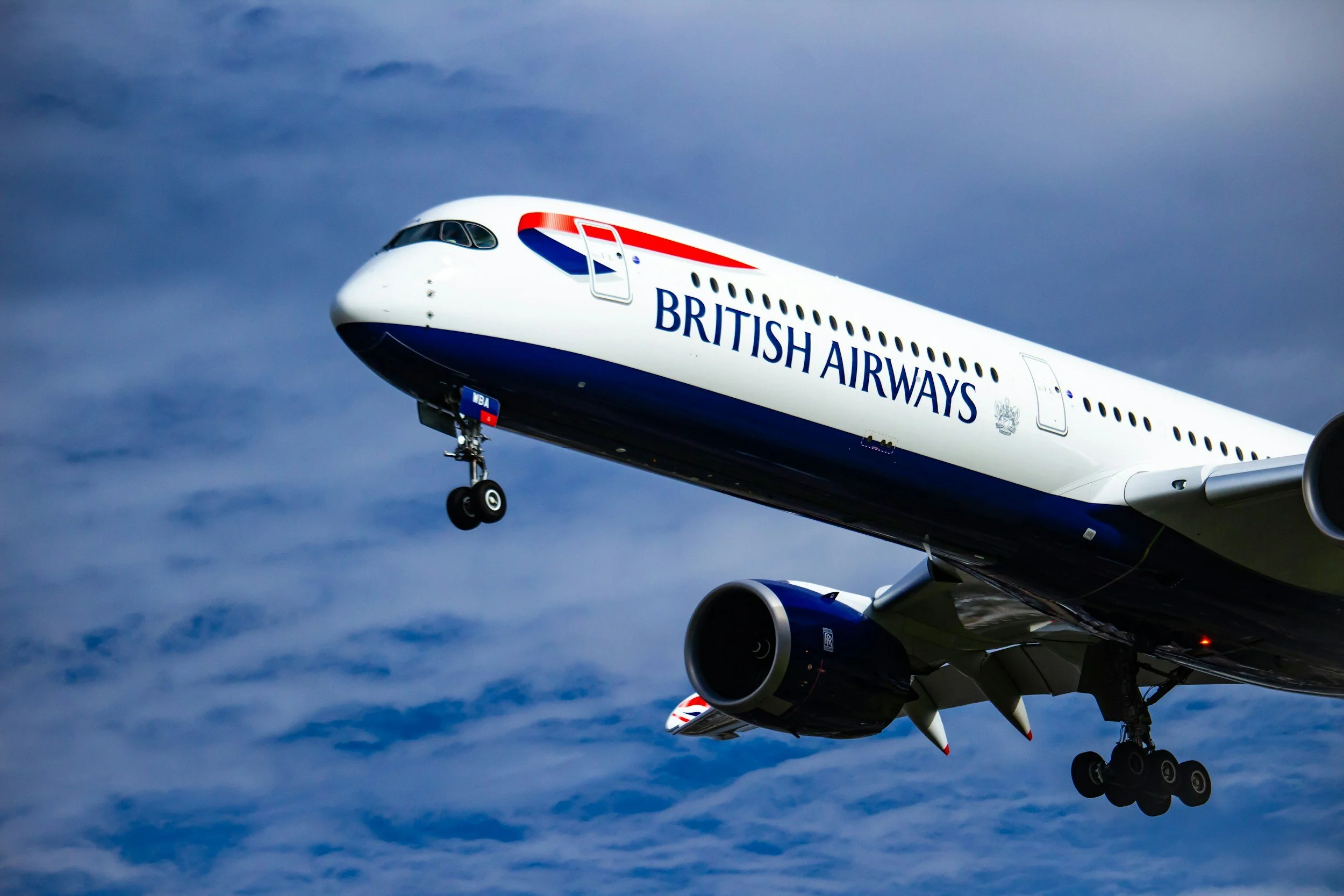
British Airways flight delay compensation claims follow the same legal framework but BA's process has some specific characteristics worth knowing.
Step 1: Submit via the BA website. Go to britishairways.com, navigate to Help and Contacts, and find the compensation and expense claims section. BA has a dedicated form for UK261 and EU261 claims. You'll need your booking reference, Executive Club number if you have one, and the flight details.
Step 2: Be specific about the delay cause.BA flight delay compensation claims are more likely to succeed when you specify clearly that you are claiming under UK Regulation 261 and include the actual arrival time relative to the scheduled arrival. BA's system is more structured than Ryanair's, and correctly completed claims tend to receive a substantive response within 4–6 weeks.
Step 3: Expenses and duty of care. BA is legally required to provide meals, refreshments, and where necessary accommodation for significant delays. If you paid for these yourself, claim them back. Keep every receipt — BA delay compensation for expenses is processed separately from the fixed statutory amount.
Step 4: Escalate to CEDR or the CAA. If BA rejects your british airways flight delay compensation claim, escalate to CEDR (BA is a member). The Civil Aviation Authority (CAA) also has enforcement powers and a passenger advice service. For straightforward cases — three or more hours delayed, no genuine extraordinary circumstances — escalation frequently overturns the initial rejection.
What About "Extraordinary Circumstances"?
This is the phrase airlines use most often to avoid paying flight delay compensation uk claims, and it is the most widely misunderstood aspect of passenger rights.
Genuinely extraordinary circumstances — things the airline could not have avoided even with all reasonable measures taken — include volcanic ash clouds, extreme weather, unexpected political instability, and certain security incidents. These are real, and they do apply.
What does not qualify as extraordinary circumstances, based on established case law:
Technical faults — routine maintenance issues are part of normal airline operations
Staff sickness — airlines are expected to have contingency staffing
Late inbound aircraft — if the root cause was within the airline's control, the delay is claimable
Overbooking or load management — entirely within airline control
If an airline cites extraordinary circumstances, ask for the specific reason in writing. If it doesn't match the legal definition, escalate. The burden of proof lies with the airline, not with you.
Using a Claims Company — Is It Worth It?
There are numerous third-party claims companies — often called no-win-no-fee services — that will handle your flight delay compensation uk claim on your behalf. They typically take 25–35% of the compensation amount as their fee.
The honest assessment: for straightforward claims that airlines process readily, using a claims company is an expensive way to receive money you could have claimed yourself for free. The process above — submitting directly, then escalating to CEDR or AviationADR if needed — costs nothing and involves only a modest amount of admin.
Where claims companies add value is in genuinely contested cases, multi-leg journeys with complex delay calculations, or situations where the passenger simply doesn't have the time or inclination to chase. If you choose this route, check the company is FCA-authorised and read the fee agreement carefully before signing anything.
One Thing That Doesn't Change: You Still Need to Get Home
Here's what the compensation process doesn't cover — the hours you spend stranded at the terminal, the taxi or transfer you arranged at short notice at the other end, and the stress of disrupted onward travel.
If your return flight to a London airport is delayed and you've already arranged an onward transfer, a pre-booked airport transfer with UK Airport Transfer Services adapts automatically. We track your flight in real time. If your landing time changes, your driver adjusts. You won't land to find your transfer has left without you or that you're being charged extra for waiting.
Every booking includes 30 minutes free waiting on all arrivals. If your delay is significant and you want to update us directly, our team is available around the clock on 0208 129 2660.
The compensation claim sorts out the money. We sort out getting you home.
Frequently Asked Questions
-
Under UK261, your flight must arrive at its final destination three hours or more late compared to the scheduled arrival time. The delay is measured at the destination when the aircraft doors open — not at departure. This answers the most common version of how long does a flight have to be delayed for compensation.
-
Yes. How to claim compensation for a cancelled flight follows the same UK261 framework. If you were given less than 14 days' notice of the cancellation, you are entitled to the same fixed compensation (£220, £350, or £520 depending on distance) plus a full refund or re-routing.
-
Yes. Flight delay compensation uk rights are fully intact. The UK retained EU Regulation 261/2004 as UK261 after Brexit. Flights departing from UK airports are covered regardless of the airline's nationality.
-
Ask for the specific cause in writing. Technical faults, crew shortages, and late inbound aircraft do not automatically qualify as extraordinary circumstances. If the airline's explanation doesn't hold up legally, escalate to CEDR or AviationADR — both are free for passengers.
-
Direct claims typically receive a response within 4–8 weeks. If escalated to ADR, the process can take 2–3 months. If you proceed to small claims court, add further time. There is no legal deadline by which airlines must pay once liability is established, but ADR decisions are binding on member airlines.
-
Yes. Under UK261's right to care provisions, if your flight was delayed by more than two hours, the airline was obligated to provide meals and refreshments. If they didn't, you can claim those costs back. Keep all receipts. This is separate from — and in addition to — the fixed compensation amount.
-
In England and Wales, the limitation period for contract claims is six years. This means you can potentially claim for delays going back six years from the date of submission, provided you have the relevant flight documentation.
Quick Reference: Claim Portals
Ryanair: ryanair.com → Help → EU261/UK261 Compensation
easyJet: easyjet.com → Help → Flight disruption compensation
British Airways: britishairways.com → Help and Contacts → Compensation and expense claims
Escalation (all airlines): CEDR — cedr.com/aviation | AviationADR — aviationadr.org.uk
Regulator: Civil Aviation Authority — caa.co.uk
