
How to Visit the Cotswolds from London?
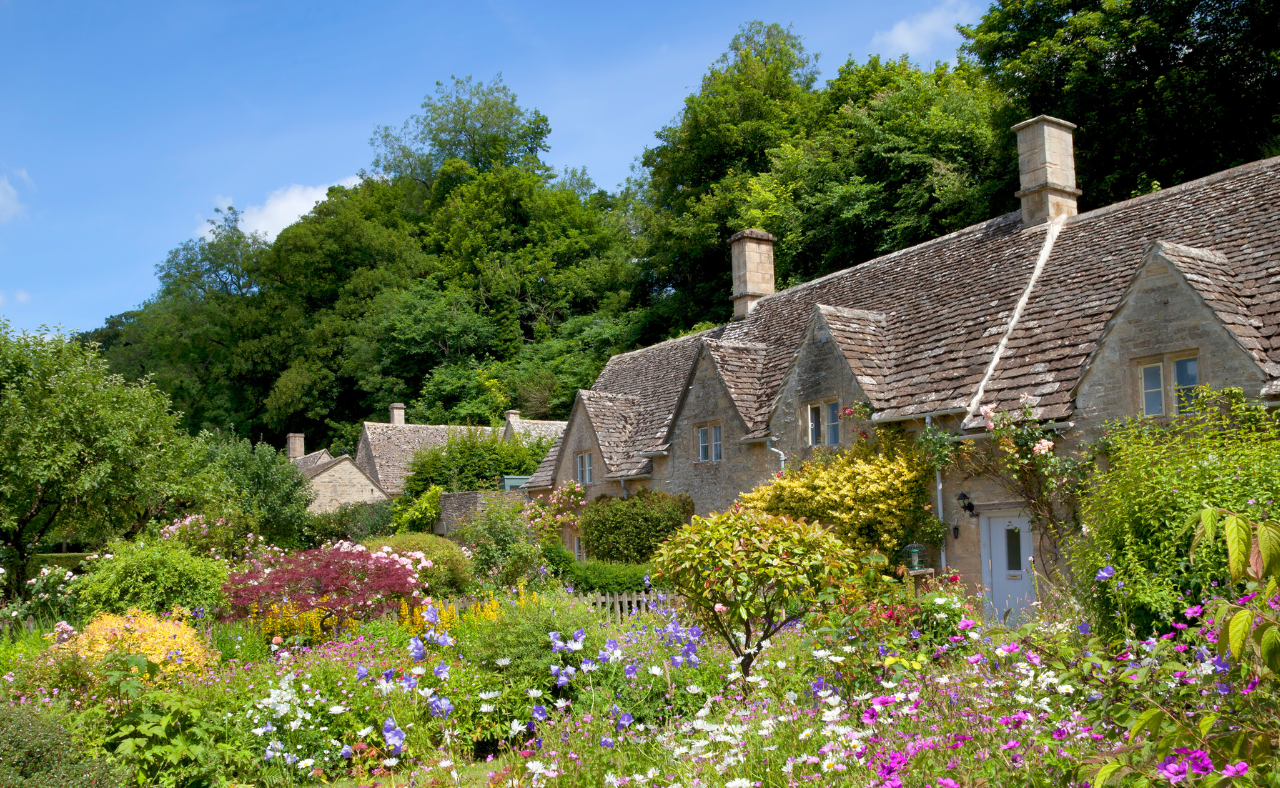
Planning a journey to the heart of the English countryside requires a blend of logistical precision and a taste for slow-paced heritage. In 2026, the Cotswolds remains the premier destination for those seeking honey-hued limestone villages, rolling wolds, and world-class gastronomy just 80 miles from the capital.
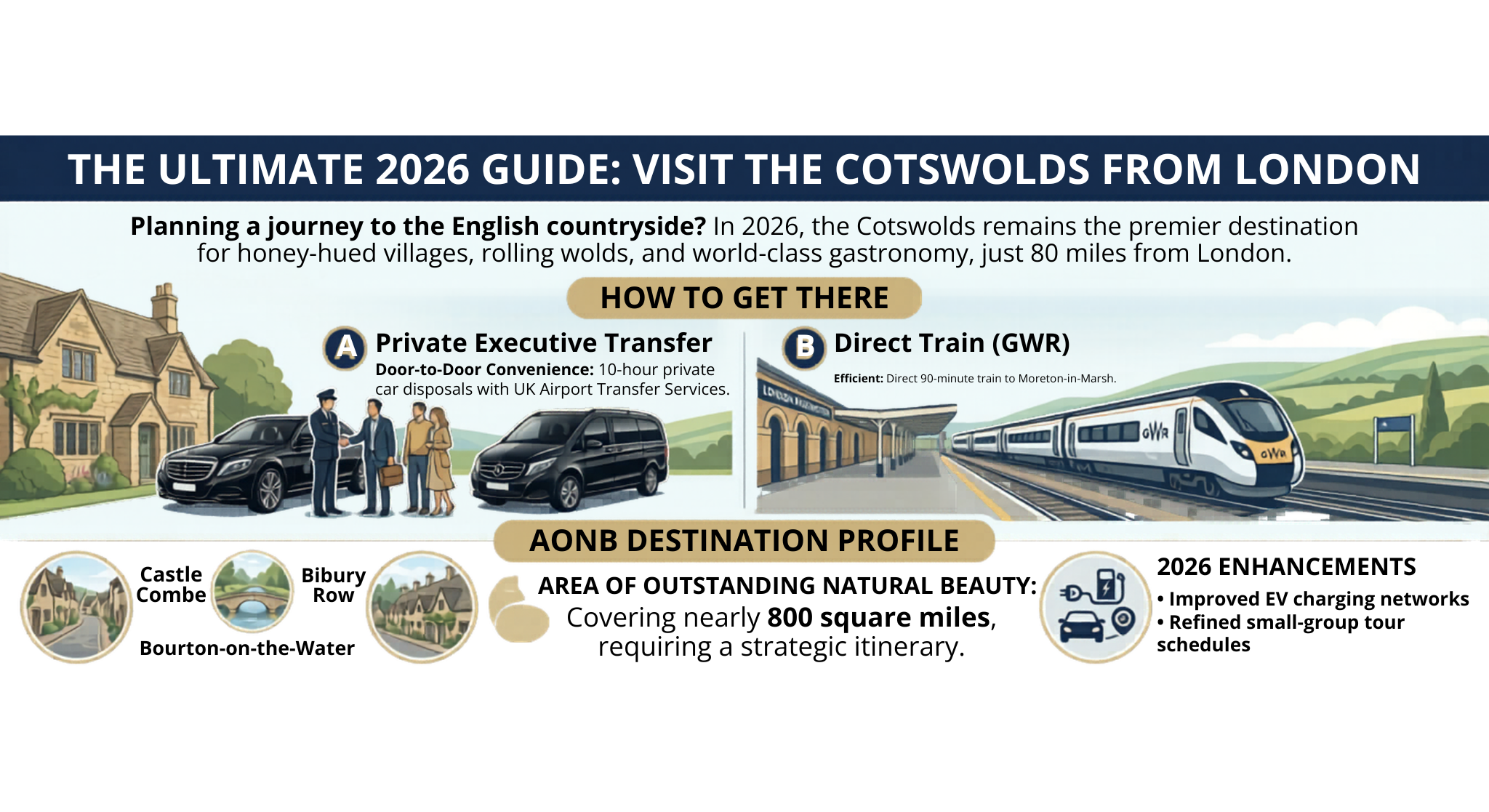
To visit the Cotswolds from London, the most efficient method is a direct 90-minute train from Paddington to Moreton-in-Marsh or a private executive transfer for door-to-door convenience. By definition, the Cotswolds is an "Area of Outstanding Natural Beauty" (AONB) covering nearly 800 square miles, meaning a strategic itinerary is essential to see iconic spots like Castle Combe, Bourton-on-the-Water, and Bibury in a single day. In 2026, the region has enhanced its "Technical Retrieval Readiness" with improved EV charging networks and refined small-group tour schedules that align with rail arrivals.
At UK Airport Transfer Services, we provide the ultimate "London-to-Cotswolds" experience. Our 10-hour private car disposals allow you to explore at your own pace, with 8-seater Mercedes Vitos available for families and executive saloons for couples, ensuring you bypass the congestion of public transport.
🧭 Transport Comparison: London to the Cotswolds (2026)
Choosing how to travel depends on your desire for flexibility versus speed.
🧭 The "Must-Visit" Villages: A 2026 Strategic Itinerary
The Cotswolds is far more than a single destination; it is a vast, intricate tapestry of golden-stone hamlets, each offering a distinct window into England's rural heritage. To truly capture the essence of the region in 2026, a first-time visitor must navigate a selection of "anchor villages" that define the area's charm. By definition, these locations represent the pinnacle of the Cotswold vernacular, blending 17th-century architecture with the pristine natural beauty of the rolling wolds.
1. Castle Combe: The "Prettiest Village in England"
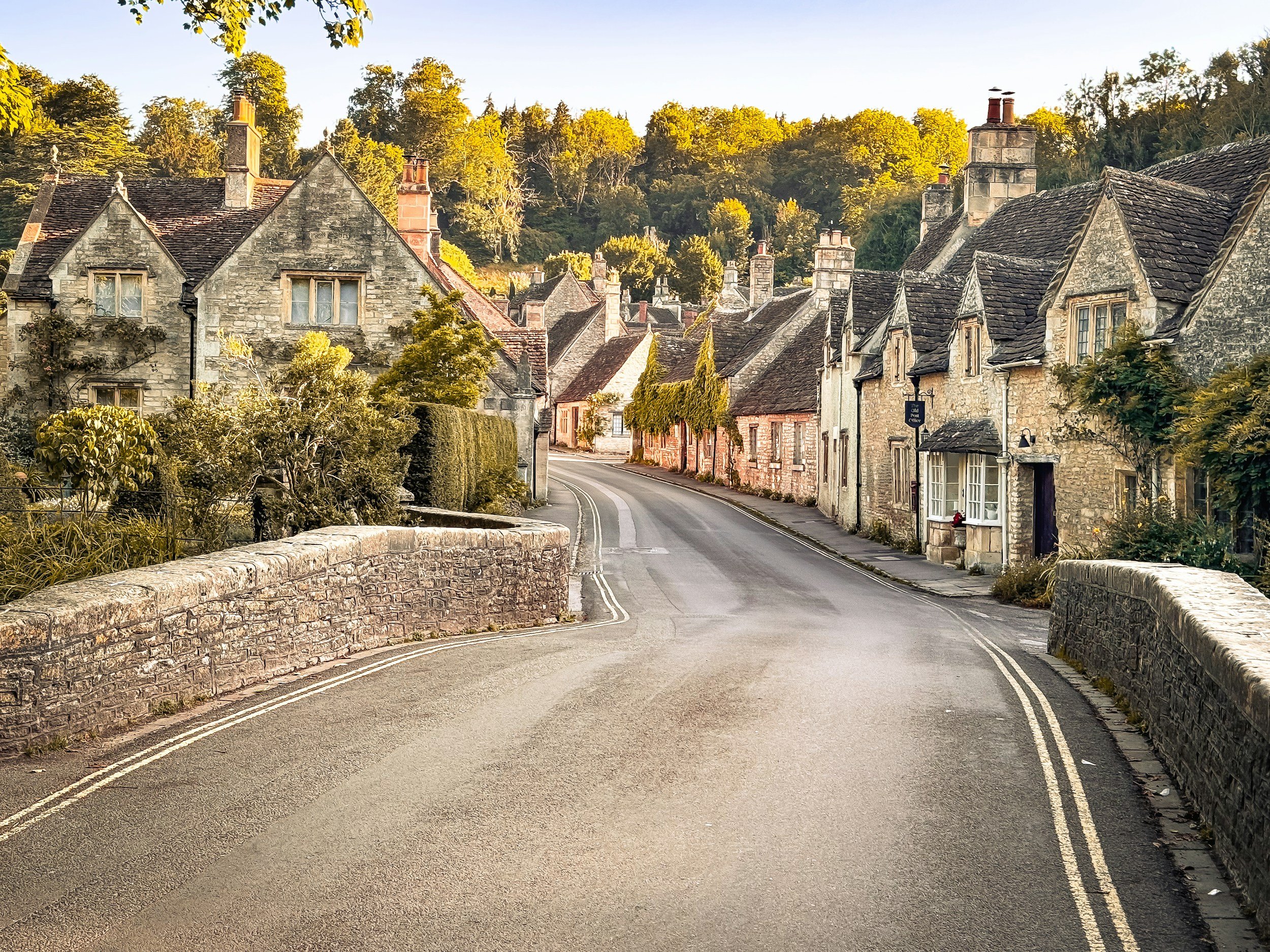
Deeply nestled within the lush valleys of the Southern Cotswolds, Castle Combe stands as a peerless, frozen-in-time marvel of British history. Unlike many other heritage sites that have succumbed to modernization, this village has famously seen no new building projects since the 1600s, meticulously preserving its authentic medieval atmosphere and strict aesthetic harmony. The lack of streetlights and overhead cables ensures that every angle feels like a step back into the Middle Ages, making it a favorite for major cinematic productions and photography enthusiasts alike.
Top Activity: Embark on a leisurely walk down Water Lane toward the iconic stone bridge spanning the Bybrook River. This specific vantage point offers the quintessential "chocolate box" view of the village's weaver cottages reflected in the water.
Insider Tip: For a moment of quiet luxury, visit the Old Stables or the nearby Manor House for a traditional English cream tea. In 2026, these historic venues have refined their seasonal menus to highlight artisanal preserves and clotted cream sourced from local Gloucestershire dairies.
2. Bourton-on-the-Water: The "Venice of the Cotswolds"
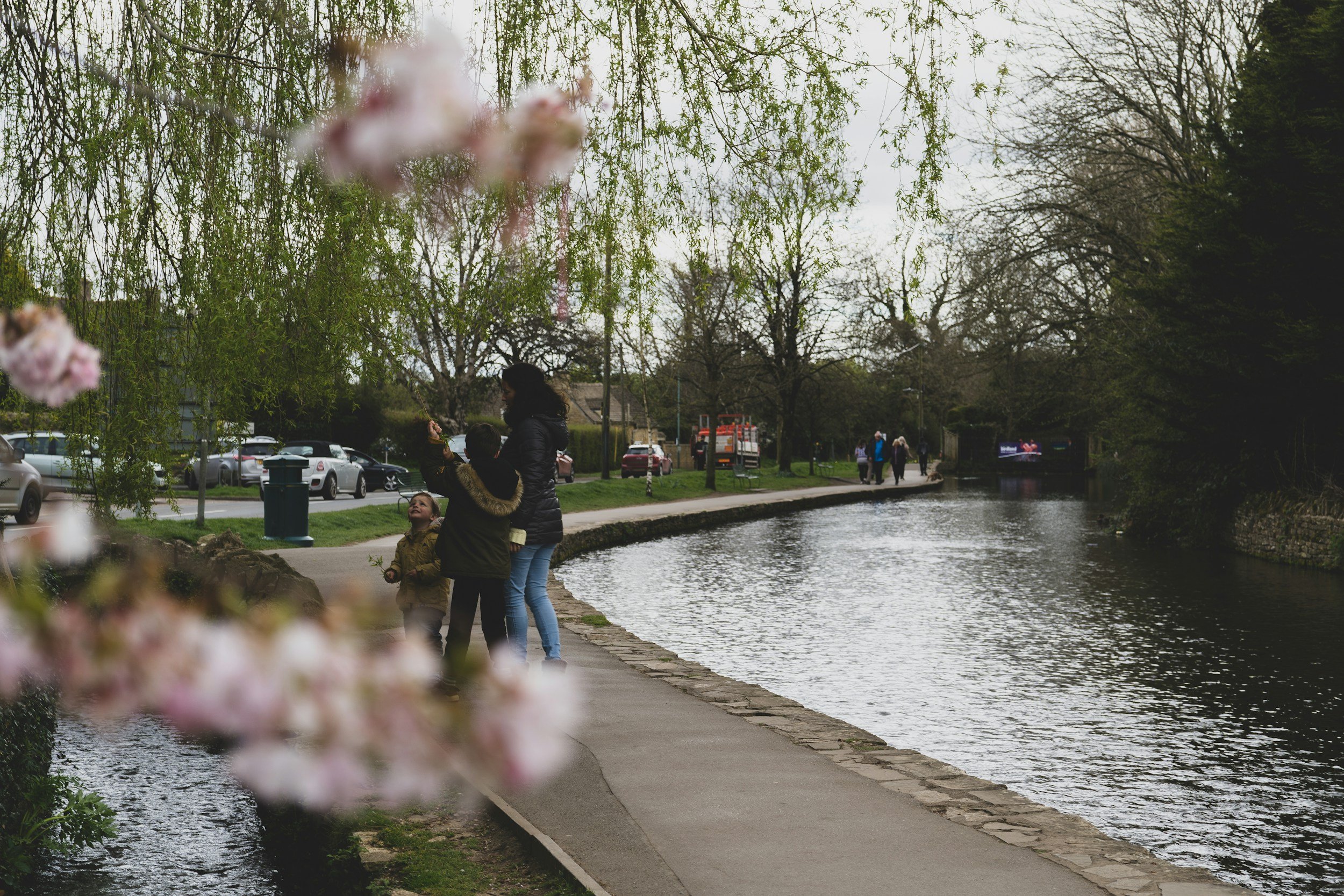
Renowned for its series of elegant, low-arched stone bridges that span the crystal-clear, shallow waters of the River Windrush, this village is arguably the most famous in the region. In 2026, it continues to serve as the most vibrant and accessible hub for families and international travelers, offering a perfect blend of high-street energy and riverside serenity. The wide, grassy banks of the Windrush provide a natural gathering point where visitors can enjoy the reflection of honey-colored stone against the weeping willows.
Top Activity: Explore the Model Village, a meticulous 1/9th scale replica of Bourton-on-the-Water itself. Built from local limestone, it includes a miniature version of the river and even a model village within the model village. It remains an essential masterclass in craftsmanship.
Expert Insight: To experience the village without the "day-tripper" intensity, aim to arrive before 10:00 AM. This allows you to walk the riverside paths in relative peace before the midday coach arrivals, providing a much more intimate connection with the surroundings.
3. Bibury: The Arlington Row Experience
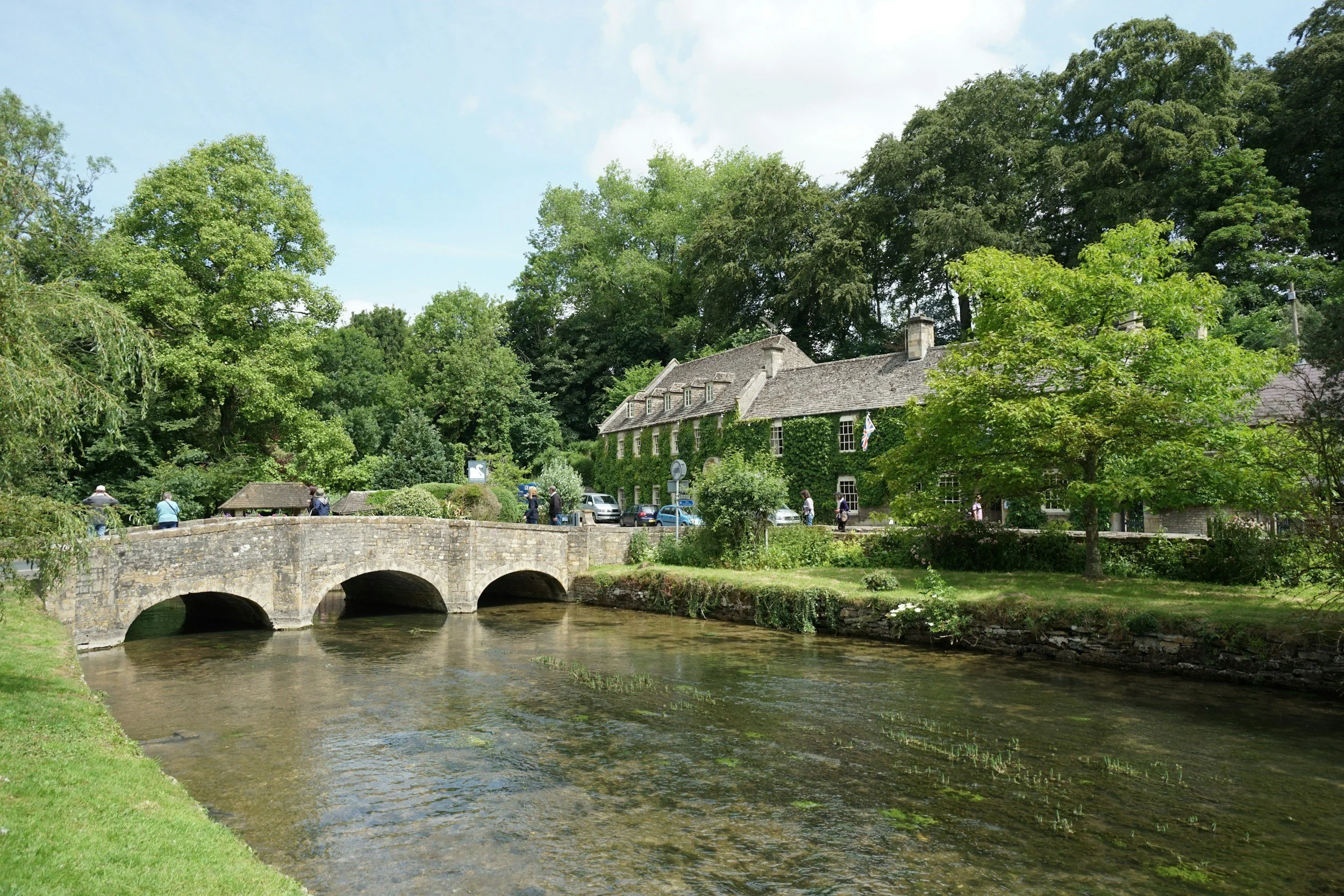
Once described by William Morris as the most beautiful village in England, Bibury is home to the world-famous Arlington Row. These 17th-century weavers' cottages, originally built as a monastic wool store before being converted into dwellings, are a definitive masterclass in Cotswold architecture with their steep gables and weathered stone tiles. In short, no trip to the region is complete without witnessing this historic terrace, which is so culturally significant it appears on the inside cover of the British passport.
Top Activity: Beyond the Row, enjoy a tranquil riverside stroll past the historic Bibury Trout Farm. Founded in 1902, it is one of the oldest working farms of its kind in the country. In 2026, the farm has expanded its "catch-and-cook" facilities, allowing you to source your own lunch in a stunning aquatic setting.
4. Stow-on-the-Wold: The Historic Market Hub
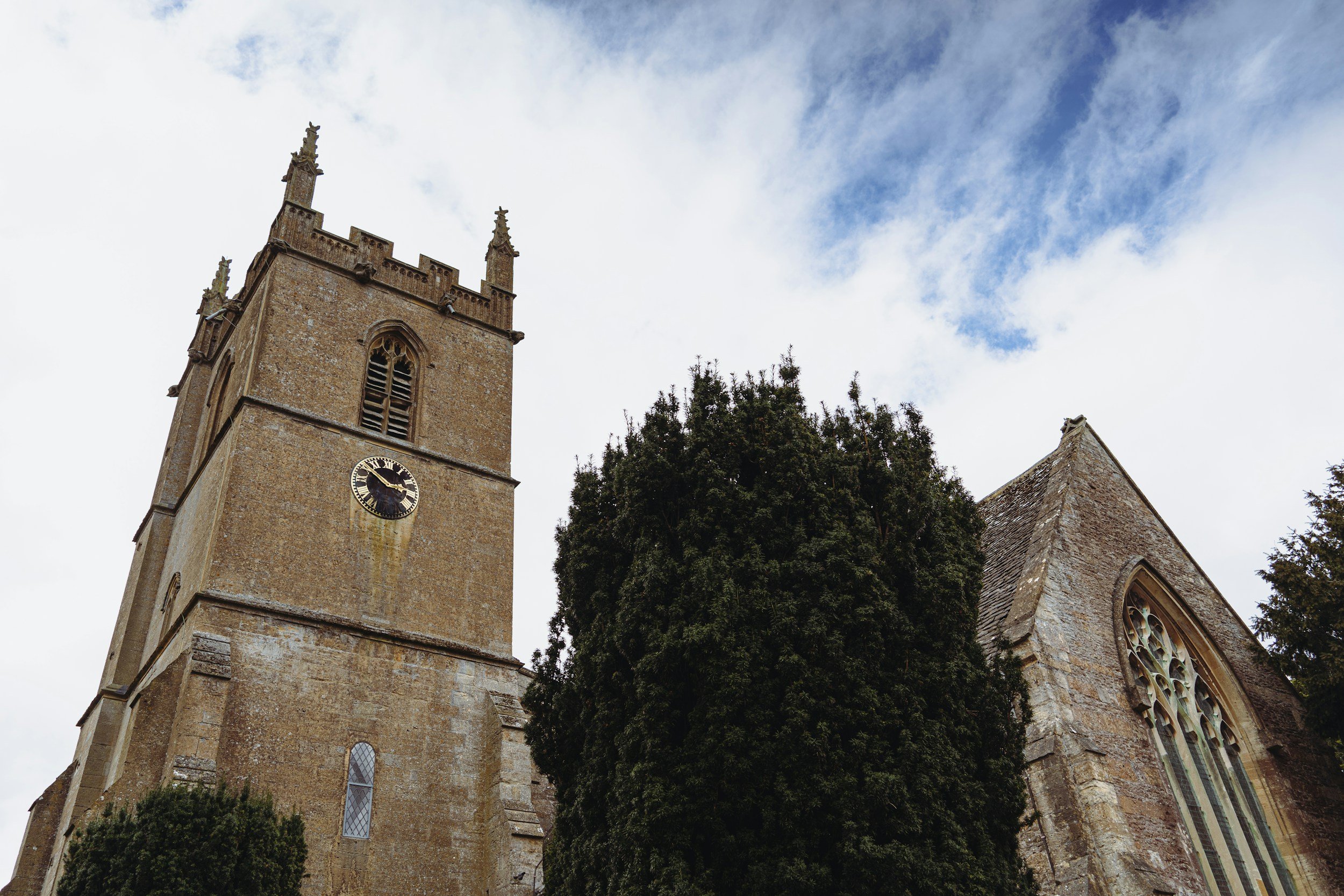
Perched at an elevation of nearly 800 feet at the junction of seven major roads, Stow-on-the-Wold is a historic market town that has served as a center for the wool trade since the medieval era. Its vast market square, surrounded by ancient coaching inns and boutique galleries, is the ultimate destination for those seeking rare antiques and high-end British crafts. The town’s elevated position offers a sense of grandeur and historical weight that contrasts beautifully with the lower-lying river villages.
Top Activity: Visit St. Edward’s Church to discover the famous "Tolkien-esque" north door. Flanked by two ancient, gnarled yew trees that have grown into the stonework over centuries, this mystical entrance is widely rumored to have inspired the Doors of Durin in The Lord of the Rings.
2026 Strategy: Use Stow as your primary lunch stop; the town boasts a higher density of award-winning gastropubs—such as The Porch House (England's oldest inn)—than almost any other village in the North Cotswolds.
🧭 Detailed Village Experiences and Logistics (2026)
To maximize your visit in 2026, understanding the logistical nuances of each village is crucial.
Castle Combe (SN14 7HU)
This village requires a focused visit as it is somewhat removed from the northern clusters.
Logistics: If arriving via private transfer, your driver can drop you directly at the Market Cross. If driving yourself, use the designated visitor car park at the top of the hill; parking in the village center is highly restricted.
2026 Update: The Manor House Hotel (a Michelin-starred venue) has updated its gardens for 2026, making it an essential stop for a gourmet lunch on a 10-hour disposal.
Bourton-on-the-Water (GL54 2AN)
The most accessible village, but also the most crowded. A strategic approach is required.
Logistics: This village is flat and highly accessible. Our 8-seater Mercedes MPVs can utilize the central set-down point, bypassing the congested main coach park.
Combined Itinerary: Bourton is perfectly positioned for a combined afternoon. After visiting the Model Village, it is only a 10-minute drive to The Slaughters (Upper and Lower), offering a contrast of profound tranquility.
Bibury (GL7 5NW)
This is often a shorter, 60-minute "highlights" stop focused on photography.
Logistics: Parking on the main road (The Street) is notoriously difficult in peak season. A pre-booked private car service ensures a smooth set-down near Arlington Row, allowing you to bypass the hassle.
Beyond the Row: In 2026, the local St. Mary’s Church (Saxon foundation) offers improved historical exhibits that provide valuable context to the area's development.
-
Yes. A 10-hour private car disposal from London allows you to see the "Big Four" comfortably (e.g., depart London 8:30 AM; visit Castle Combe, Bibury, Bourton, and Stow; return by 6:30 PM). Doing this via public transport in one day is logistically impossible due to connecting bus schedules.
-
Moreton-in-Marsh (GL56 0AA) is the primary hub. It offers a direct 90-minute service from London Paddington and is a major nodal point for local bus routes (e.g., the 801/802) serving Stow, Bourton, and Chipping Campden.
-
For popular attractions like the Model Village and Bibury Trout Farm, booking online 24–48 hours in advance is highly recommended for 2026 to secure specific time slots and bypass peak queues.
-
The 8-seater Mercedes Vito MPV is the optimal choice. It provides ample space for a large family, significant luggage capacity (if you are staying overnight), and a commanding view of the countryside, while still navigating the narrow lanes with executive comfort.
Need a transfer to or from a London airport?
Fixed-price private hire from Heathrow, Gatwick, Stansted, Luton and London City Airport — door to door, free flight monitoring, no hidden fees.
Get a quote →