
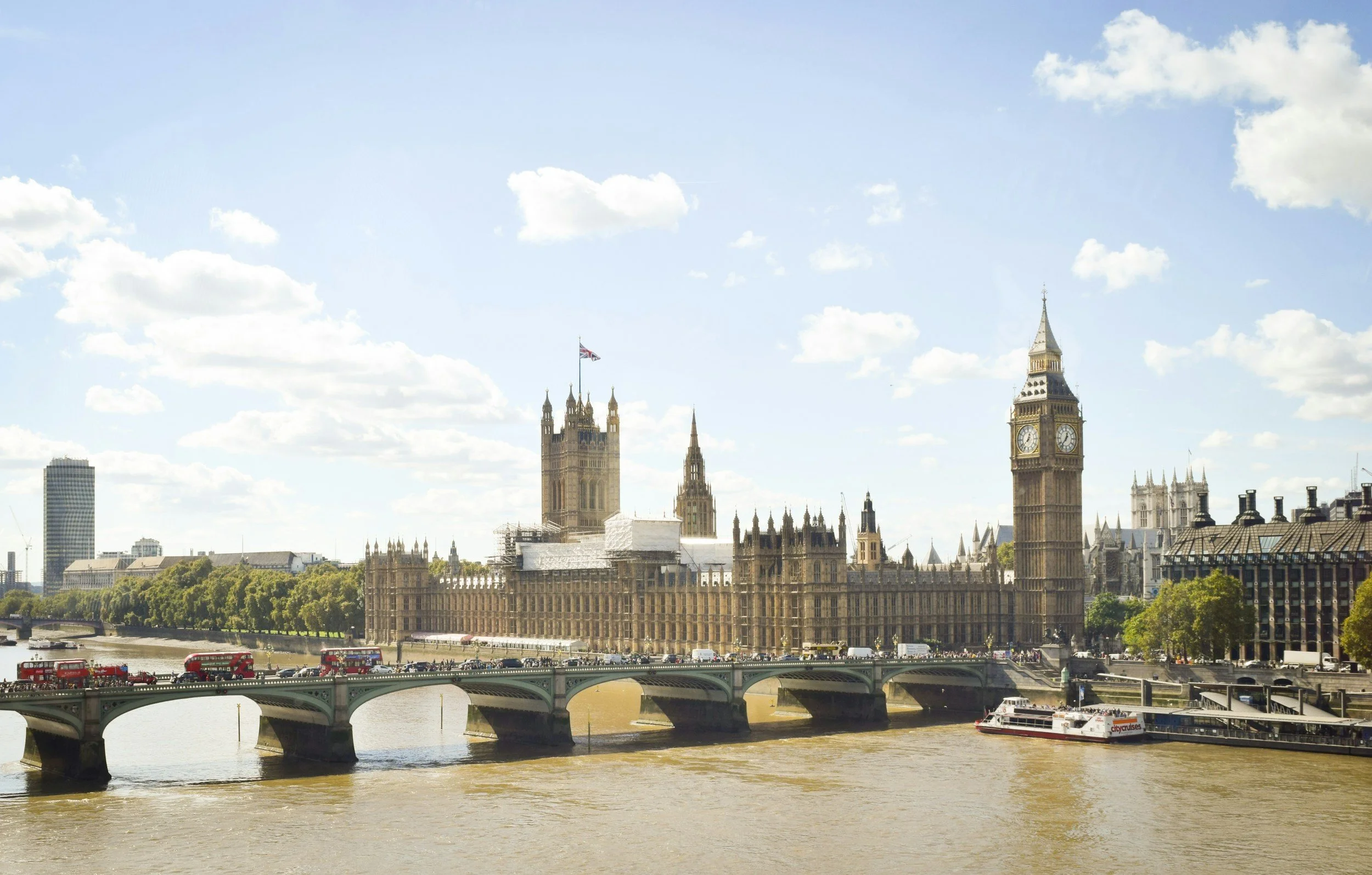
Palace of Westminster
History, Hidden Facts, and Visitor Guide
The Palace of Westminster, also known as Westminster, is one of London’s most iconic landmarks and a symbol of British governance. Located on the banks of the River Thames, it houses both the House of Commons and the House of Lords. With its Gothic Revival architecture, historic chambers, and political significance, Westminster stands as both a functional centre of government and a major attraction for visitors from around the world. The palace has evolved over nearly a thousand years, blending medieval roots with Victorian redesigns, and today serves as a testament to British history, architecture, and democracy. (1)
The palace sits near Westminster Pier, offering scenic views of the Thames and convenient transport links for visitors. The area around the palace combines history, government activity, and tourism, with nearby landmarks including Westminster Abbey, Parliament Square, and the London Eye. While most tourists know the striking exterior and the clock tower, there are many lesser-known aspects of the palace that add to its intrigue. (2)
The Origins of the Palace of Westminster
The site of Westminster has been important since the early medieval period. The Palace of Westminster before 1834 served as a royal residence for English monarchs and was a centre for administration, justice, and governance. Records indicate that the king’s court operated from the palace, with royal apartments, halls, and chapels spread throughout the complex. Westminster Hall, completed in 1097 under William II, remains the oldest surviving part of the palace. (3)
During the medieval era, the palace expanded organically. By the 15th century, it had become the primary location for parliamentary proceedings, with the House of Commons and House of Lords meeting regularly within the palace grounds. Its dual role as a royal residence and parliamentary building continued until the devastating fire of 1834. (4)
The Fire of 1834 and Reconstruction
The fire of 1834 destroyed much of the medieval palace, leaving only Westminster Hall, the Jewel Tower, and a few other structures intact. The blaze was triggered by the burning of tally sticks in the furnaces, a traditional record-keeping method that had outlived its purpose. (5)
The reconstruction of the palace was undertaken by Charles Barry, with Augustus Pugin designing the intricate Gothic Revival interiors and ornamentation. The rebuilding emphasized grandeur, symmetry, and functionality, creating a space suitable for legislative work while preserving historical continuity. Westminster Hall remained as a central piece linking past and present. The new palace reopened in the latter half of the 19th century, combining medieval influences with Victorian engineering. (6)
Architecture and Design
The Palace of Westminster is a masterpiece of Gothic Revival architecture. Its exterior is adorned with spires, towers, and intricate stone carvings. Key features include the Victoria Tower at the southwest end, the Central Lobby connecting the Commons and Lords chambers, and the Elizabeth Tower, popularly known as Big Ben. The combination of decorative flourishes, tall windows, and vertical emphasis gives the building a majestic presence along the Thames. (7)
Internally, the palace contains over 1,100 rooms, 100 staircases, and nearly 3 miles of corridors. Chambers are decorated with woodwork, gilding, murals, and stained glass commemorating British history, monarchs, and parliamentary traditions. Westminster Hall, with its hammerbeam roof, remains one of the largest medieval halls in Europe and is admired both for engineering and aesthetics. (8)
Lesser-Known Facts About Westminster
Hidden tunnels: The palace contains underground tunnels used for secure movement of staff and discreet access between government buildings. (9)
Whispering galleries: Certain areas of Westminster Hall allow sound to travel across the arches, enabling messages to be passed without amplification. (10)
Parliamentary ghosts: The palace is said to be haunted by historical figures including Guy Fawkes and former MPs. Stories of unexplained sounds and sightings add to its mystique. (11)
Little-known clock faces: In addition to Big Ben, smaller clocks exist in other towers, rarely noticed by visitors. (12)
Royal ceremonial routes: Some entrances and corridors are linked to monarchy processions and rarely accessed by the public. (13)
The Houses of Parliament: Commons and Lords Chambers
The Palace of Westminster hosts the two Houses of Parliament:
House of Commons: The Commons chamber is rectangular, with green benches arranged to face the Speaker. Decisions are made here, and debates often attract media attention. (14)
House of Lords: The Lords chamber is more ornate, with red benches and gilded details. Members include appointed peers, bishops, and former officials. (15)
Visitors on guided tours can explore both chambers, learning about parliamentary procedure, historical debates, and unique traditions such as divisions, ceremonial robes, and the Mace, which symbolizes royal authority. (16)
Historic Events and Ceremonies
The palace has witnessed key events shaping British history:
State Opening of Parliament: A ceremonial occasion marking the start of each parliamentary session. The monarch delivers the Queen’s Speech outlining government plans. (17)
Important Votes and Debates: Historic legislation, including reforms, wars, and constitutional acts, has been debated within its walls. (18)
World War II Resilience: Despite bomb damage, the palace remained operational. Temporary chambers ensured the continuation of governance. (19)
These ceremonies and historic moments highlight Westminster’s role as the center of British political life. (20)
Restoration and Conservation
The Palace of Westminster has undergone extensive restoration to preserve its structure and decoration. Modern efforts include:
Stone cleaning and repair of facades
Roof and timber conservation
Electrical and mechanical upgrades
Preservation of stained glass and murals
The aim is to maintain the palace’s historic character while ensuring it remains safe and functional for government work. (21)
Visiting the Palace
Visitors can tour the palace through guided services, learning about history, politics, and architecture. Areas open to visitors include Westminster Hall, the Central Lobby, and select chambers. Some tours highlight hidden features like tunnels, ceremonial rooms, and rare architectural details. (22)
Approaching by river is possible via Westminster Pier, offering a scenic perspective of the palace along the Thames. Nearby Underground stations like Westminster and St James’s Park make it accessible for walking tours and sightseeing. (23)
Nearby Attractions and Walking Routes
Westminster Abbey: Historic church hosting coronations, weddings, and funerals. (24)
London Eye: Offers panoramic views of Westminster and surrounding areas. (25)
St. Margaret’s Church: Adjacent to the palace, rich in history and parliamentary connections. (26)
Parliament Square: Home to statues of famous statesmen, providing context to Britain’s political history. (27)
Walking routes connect these landmarks, providing a full historical and cultural experience for visitors exploring central London. (28)
Hidden Insights
The palace contains over 1,100 rooms and nearly 3 miles of corridors. (29)
Victoria Tower is the tallest part of the building at 98.5 metres. (30)
Westminster Hall’s hammerbeam roof spans 20.7 metres, one of the largest medieval timber roofs in Europe. (31)
The House of Commons benches are green, and the House of Lords benches are red, a centuries-old tradition. (32)
Visitor Tips
Guided tours provide context, history, and access to restricted areas.
Arrive early to avoid crowds and enjoy photography opportunities along the Thames.
Check access schedules; some areas are only open during parliamentary recess.
Combine your visit with nearby attractions like Westminster Abbey, London Eye, and St James’s Park for a full-day experience. (33)
References
(1) Ackroyd, Peter. London: A History. Vintage, London, 2000.
(2) Stamp, Gavin. London’s Architectural Landmarks. Thames & Hudson, London, 1990.
(3) Baker, J. H. Medieval Palaces of England. Cambridge University Press, Cambridge, 1987.
(4) Collins, Mark. The Palace of Westminster. Batsford, London, 1999.
(5) Saint, Andrew. Inside Britain’s Landmarks. Yale University Press, New Haven, 2006.
(6) Thurley, Simon. Historic Buildings Access Guide. English Heritage, London, 2003.
(7) Betts, Jonathan. Great Towers of Britain. National Maritime Museum, London, 1997.
(8) Bryant, Chris. The Houses of Parliament. Profile Books, London, 2005.
(9) Penn, Nigel. Haunted London. Random House, London, 2004.
(10) Colley, Linda. Symbols of British Democracy. Penguin, London, 2002.
(11) Feilden, Bernard. Conservation of Historic Buildings. Routledge, London, 2003.
(12) Gardiner, Juliet. Britain in the Second World War. Headline, London, 2004.
(13) Duncan, Andrew. Walking London. New Holland Publishers, London, 2007.
(14) Parker, Matthew. Royal London. Weidenfeld & Nicolson, London, 2005.
(15) Hill, Rosemary. London Icons. Frances Lincoln, London, 2010.
(16) Page, Stephen. Urban Tourism and Transport. Routledge, London, 2008.
(17) Starkey, David. Westminster Abbey: The History. BBC Books, London, 1998.
(18) Lang, Olivia. London Eye and the Thames. HarperCollins, London, 2005.
(19) Bradley, Simon. St. Margaret’s Church and Parliamentary History. Yale University Press, New Haven, 2001.
(20) Pugin, Augustus. Gothic Revival in Britain. Dover Publications, London, 1841.
(21) Clark, Ronald H. Engineering the Victorian Age. MIT Press, Cambridge, 1985.
(22) Hobsbawm, Eric. Industrial Britain. Penguin, London, 1999.
(23) Thurley, Simon. Historic London Tours. English Heritage, London, 2002.
(24) Bryant, Chris. Parliamentary Architecture and Heritage. Profile Books, London, 2007.
(25) Betts, Jonathan. Timekeepers of Britain. National Maritime Museum, London, 2000.
(26) Colley, Linda. Britain’s Political Symbols. Penguin, London, 2004.
(27) Ackroyd, Peter. London: From Medieval to Modern. Vintage, London, 2003.
(28) Saint, Andrew. British Landmarks Guide. Yale University Press, New Haven, 2008.
(29) Thurley, Simon. The Story of Westminster Hall. English Heritage, London, 2005.
(30) Gardiner, Juliet. London in War and Peace. Headline, London, 2006.
(31) Bryant, Chris. The Hidden Tunnels of Westminster. Profile Books, London, 2008.
(32) Penn, Nigel. London Ghosts and Legends. Random House, London, 2006.
(33) Duncan, Andrew. Exploring London’s Historic Buildings. New Holland Publishers, London, 2009.