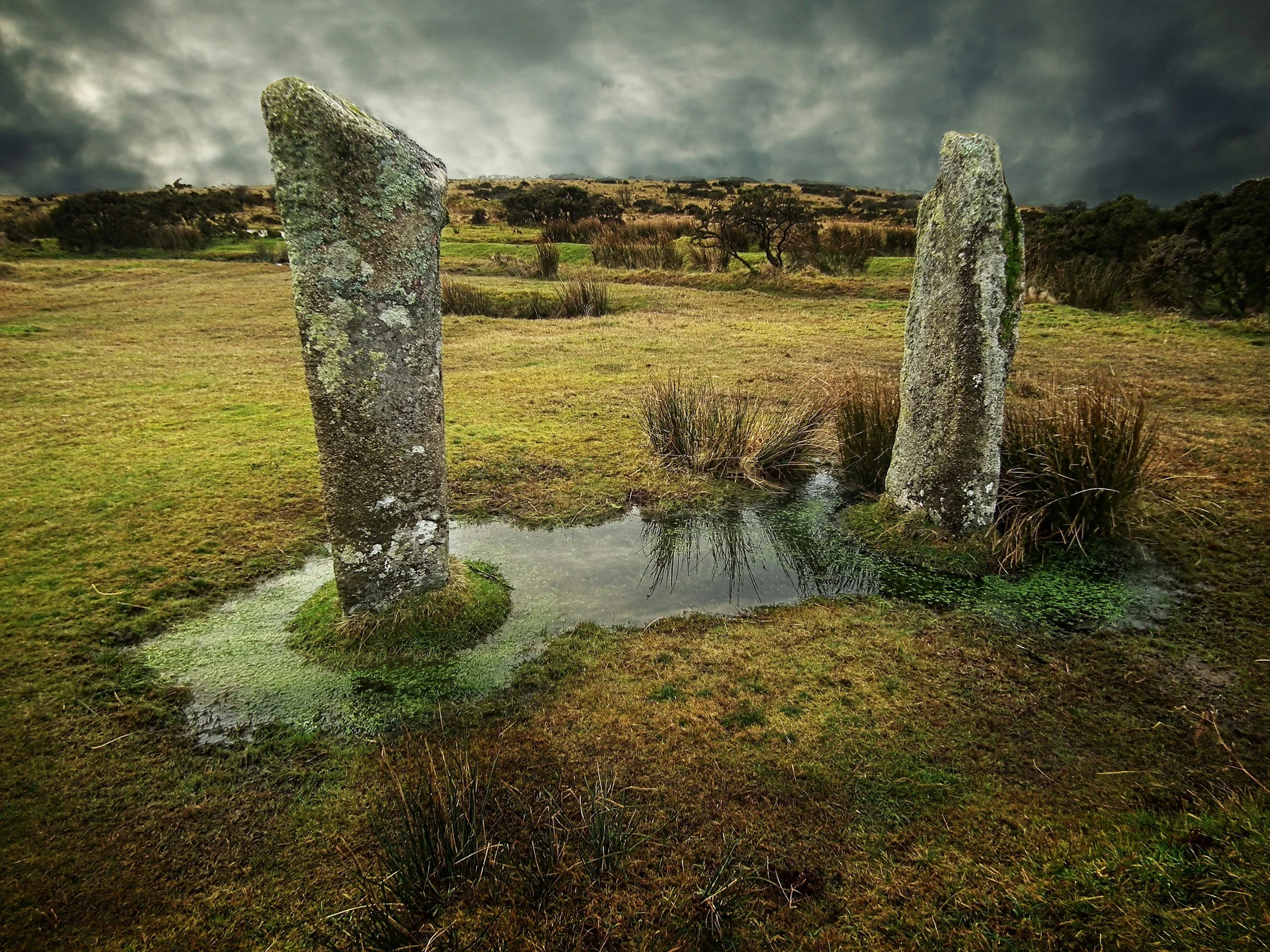
Stonehenge & The Uffington White Horse
A Private Tour Through 5,000 Years of English Prehistory
📍 Departing Central London or Any Airport | ✈️ Airport pickup available | 🕐 Full day, up to 10 hours | 🚗 Private vehicle throughout
Most people visit Stonehenge on a coach. They arrive with 40 strangers, spend 45 minutes at the stones, and leave on someone else's schedule. This tour is built entirely differently. You get a private vehicle, a knowledgeable driver, and the freedom to spend your day exactly as you choose — lingering at the stones, walking the high chalk downs of Uffington White Horse Hill, or adding an unplanned stop at Avebury when the quiet of the village pulls you in.
The combination of Stonehenge and the Uffington White Horse makes for one of the most rewarding prehistoric routes in southern England. Both sites sit within Wiltshire and Oxfordshire, connected by the ancient Ridgeway track and separated by just over an hour's drive. Add Wayland's Smithy, Dragon Hill, and the optional detour through Avebury, and you have a full day that covers roughly 5,000 years of British prehistory without ever feeling rushed.
Your price is fixed at booking. No meter, no add-ons, no surprises. The vehicle — and your driver — are yours for the day.
A Private Tour Through 5,000 Years of English Prehistory
-
Stonehenge
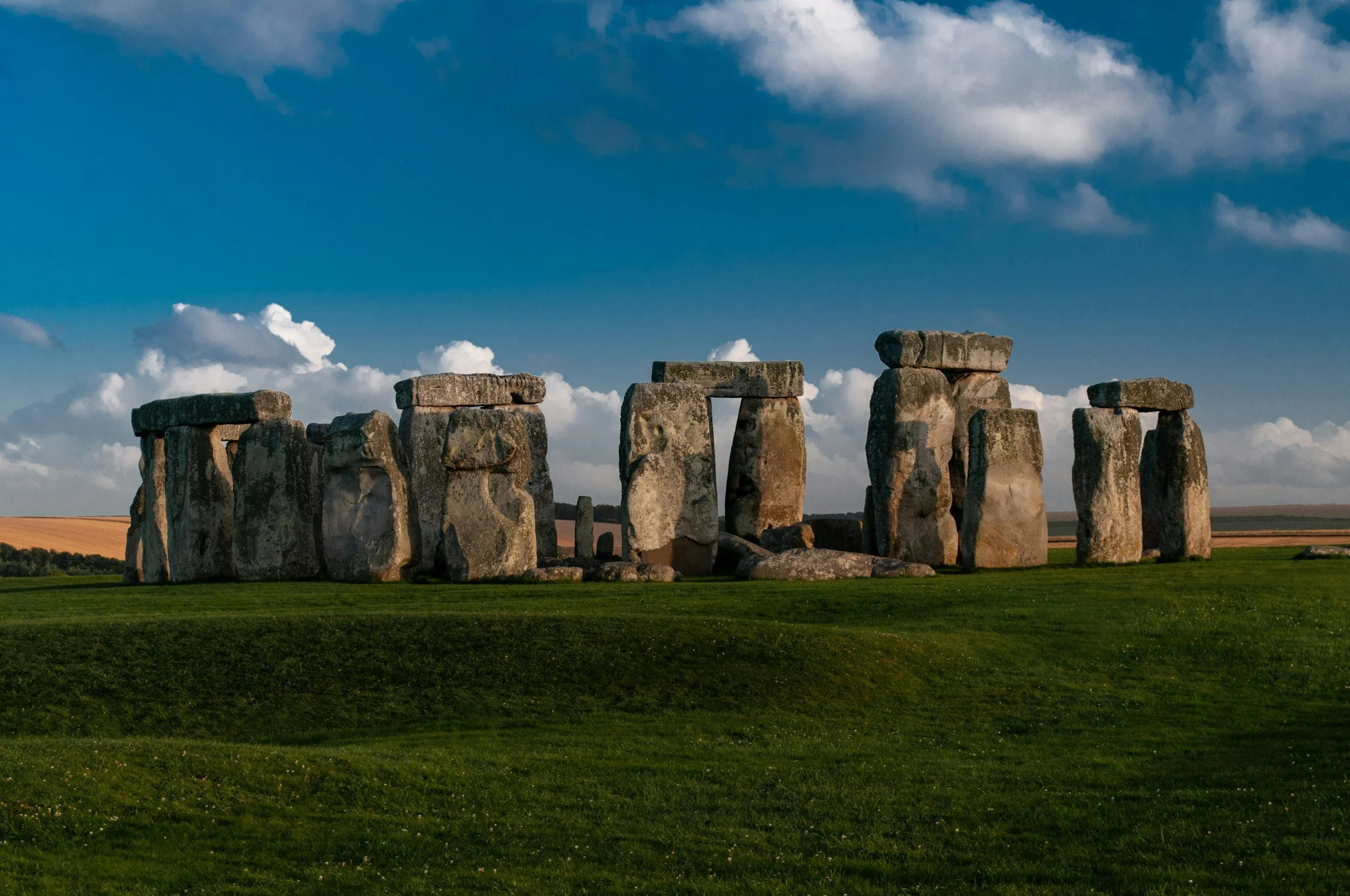
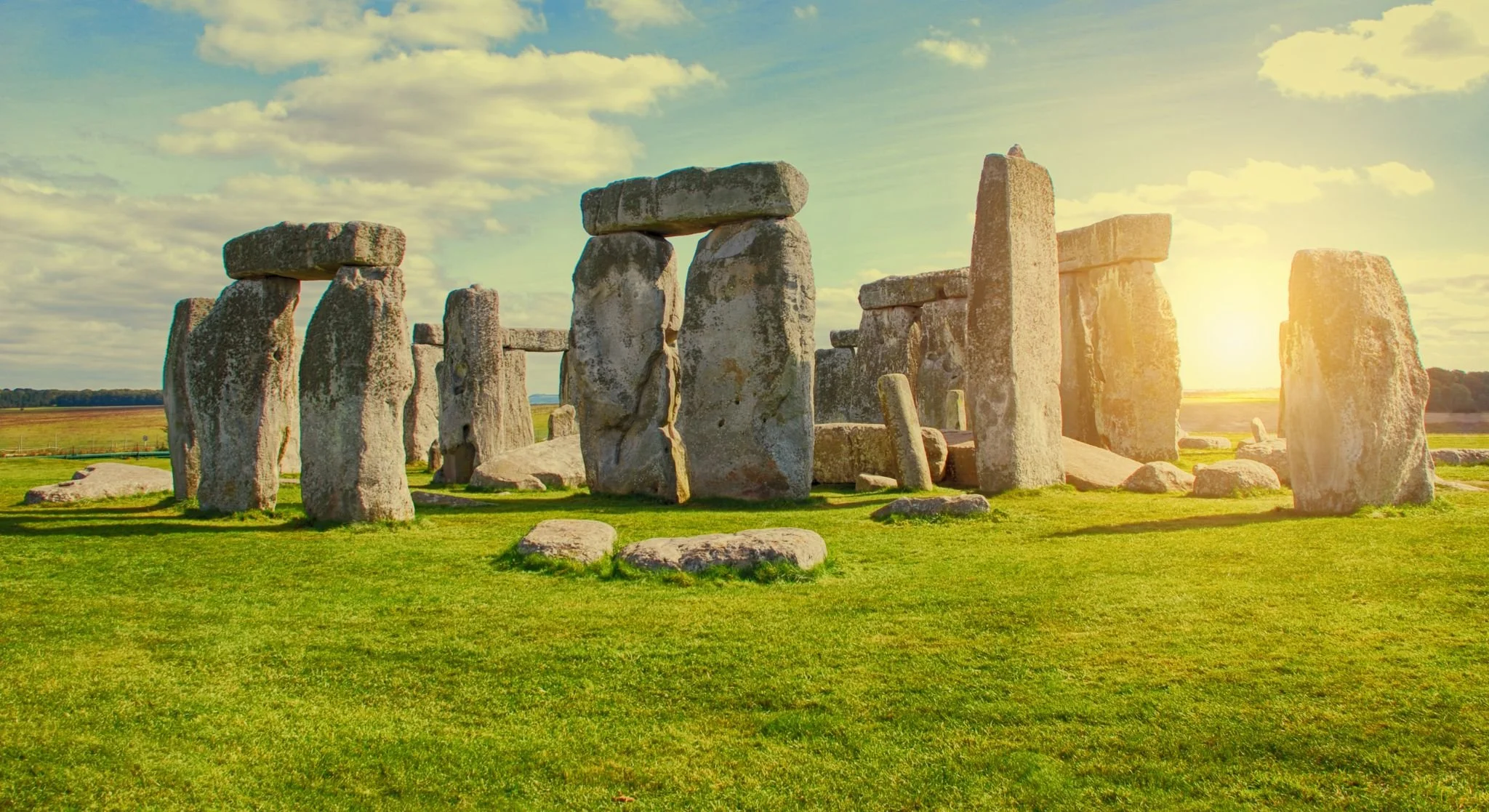
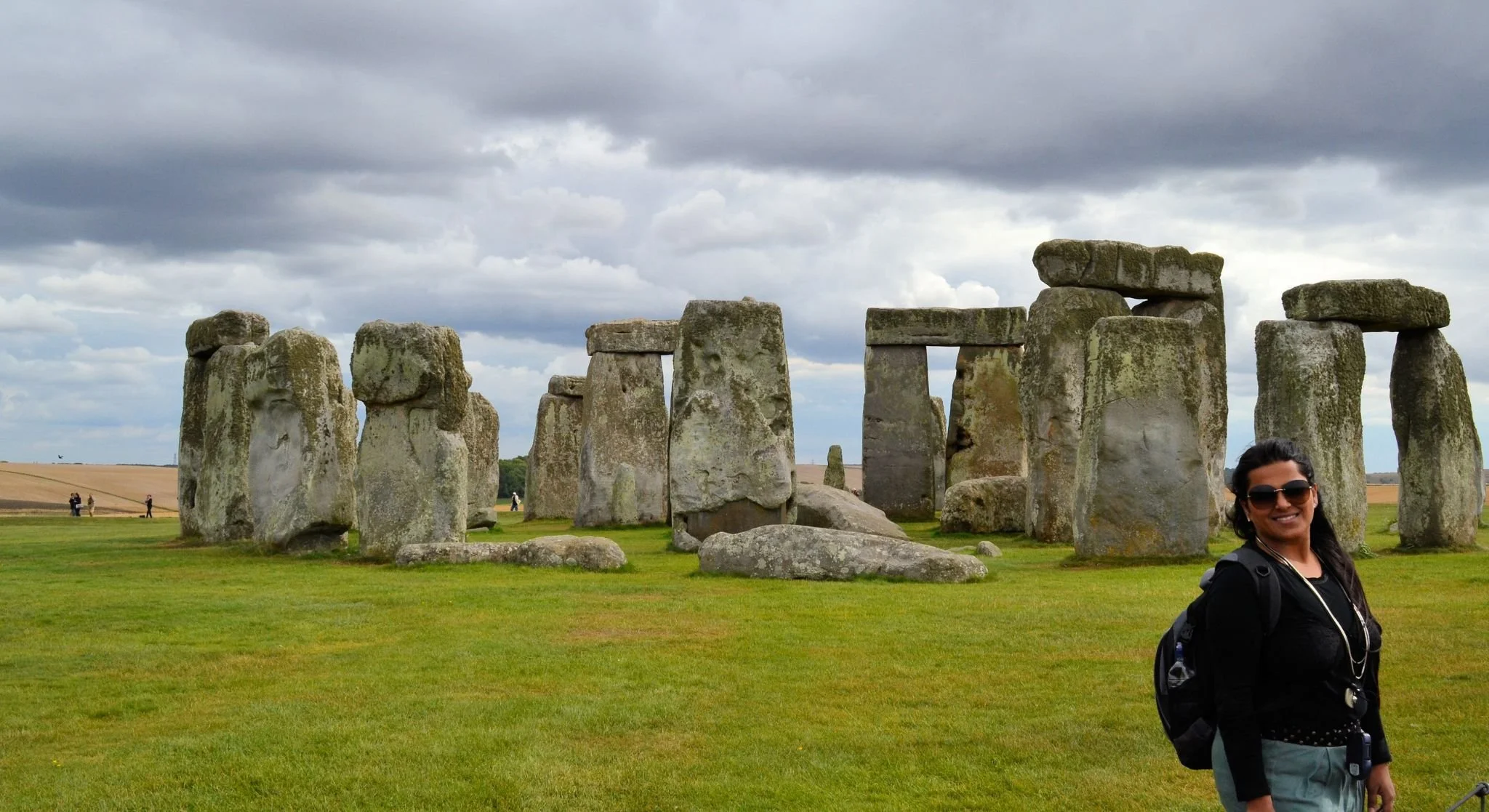
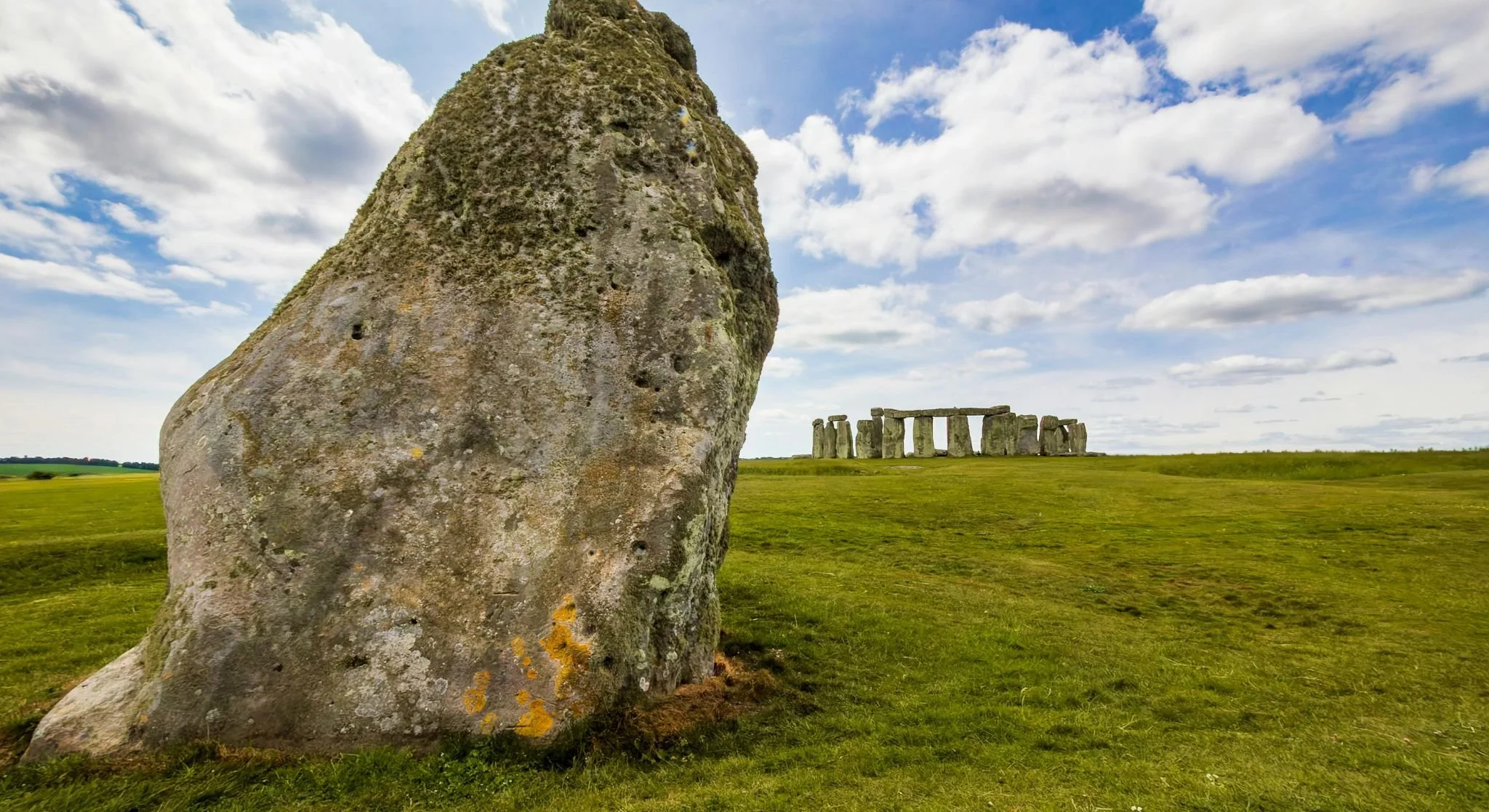
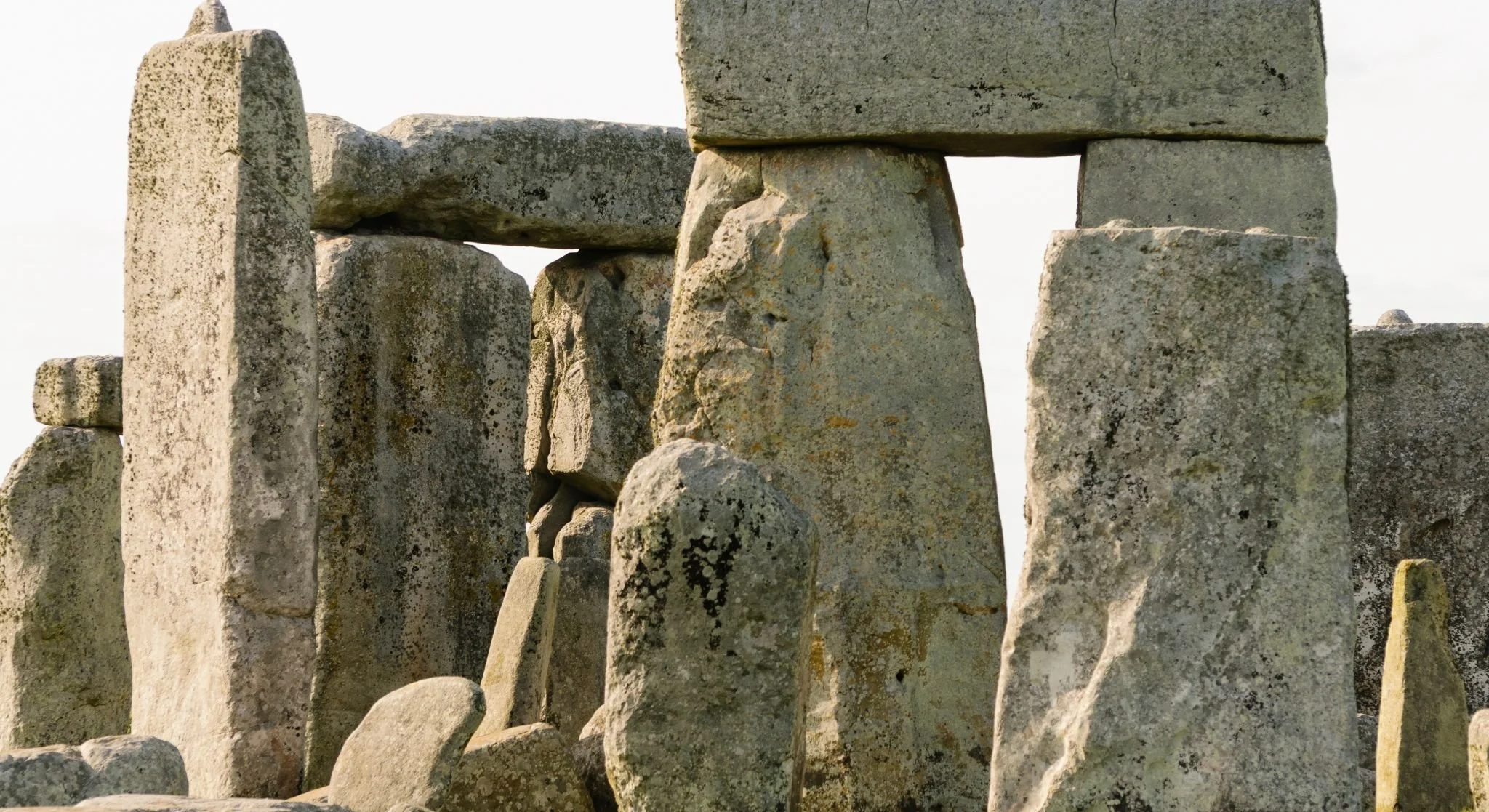
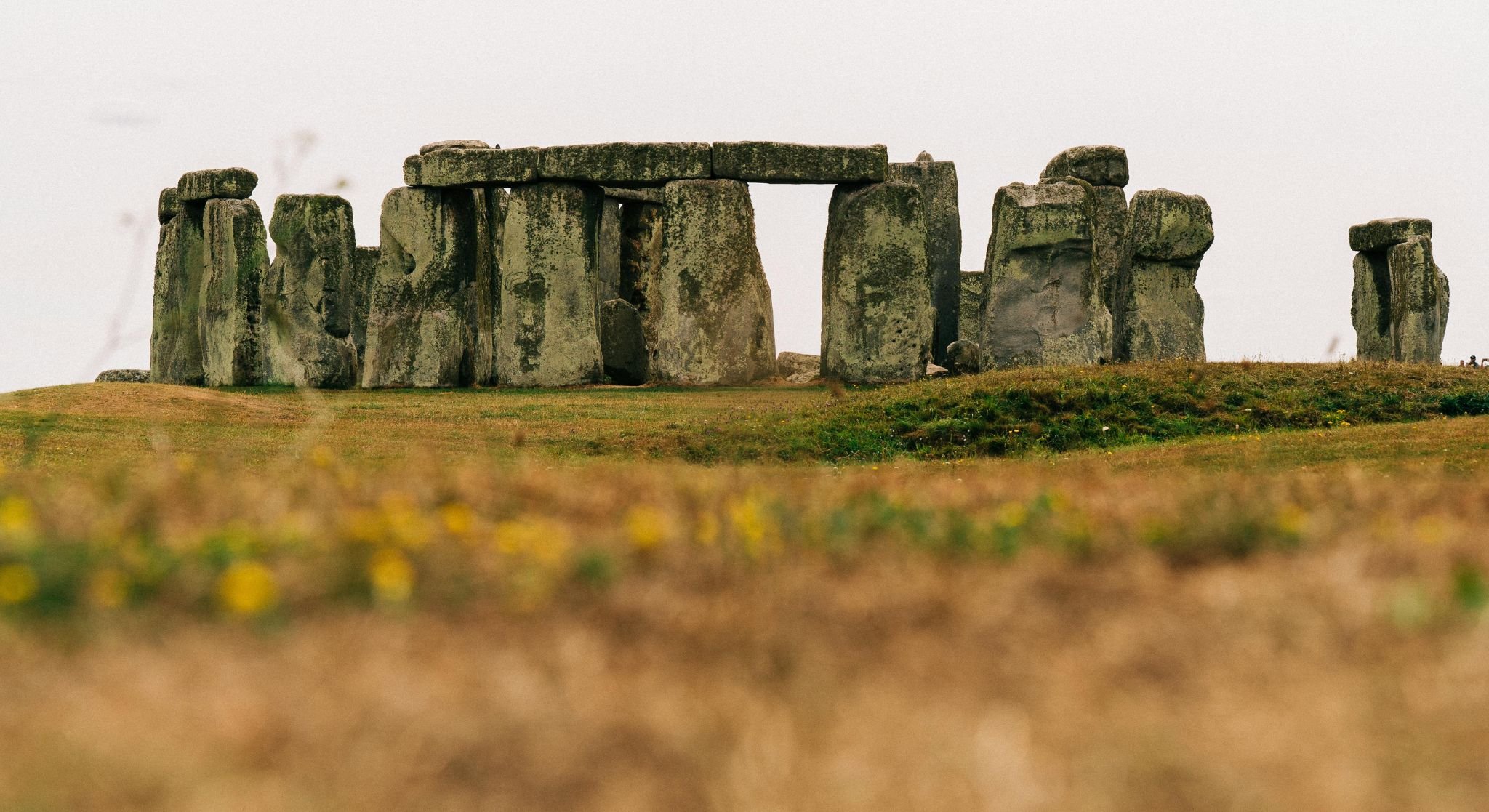
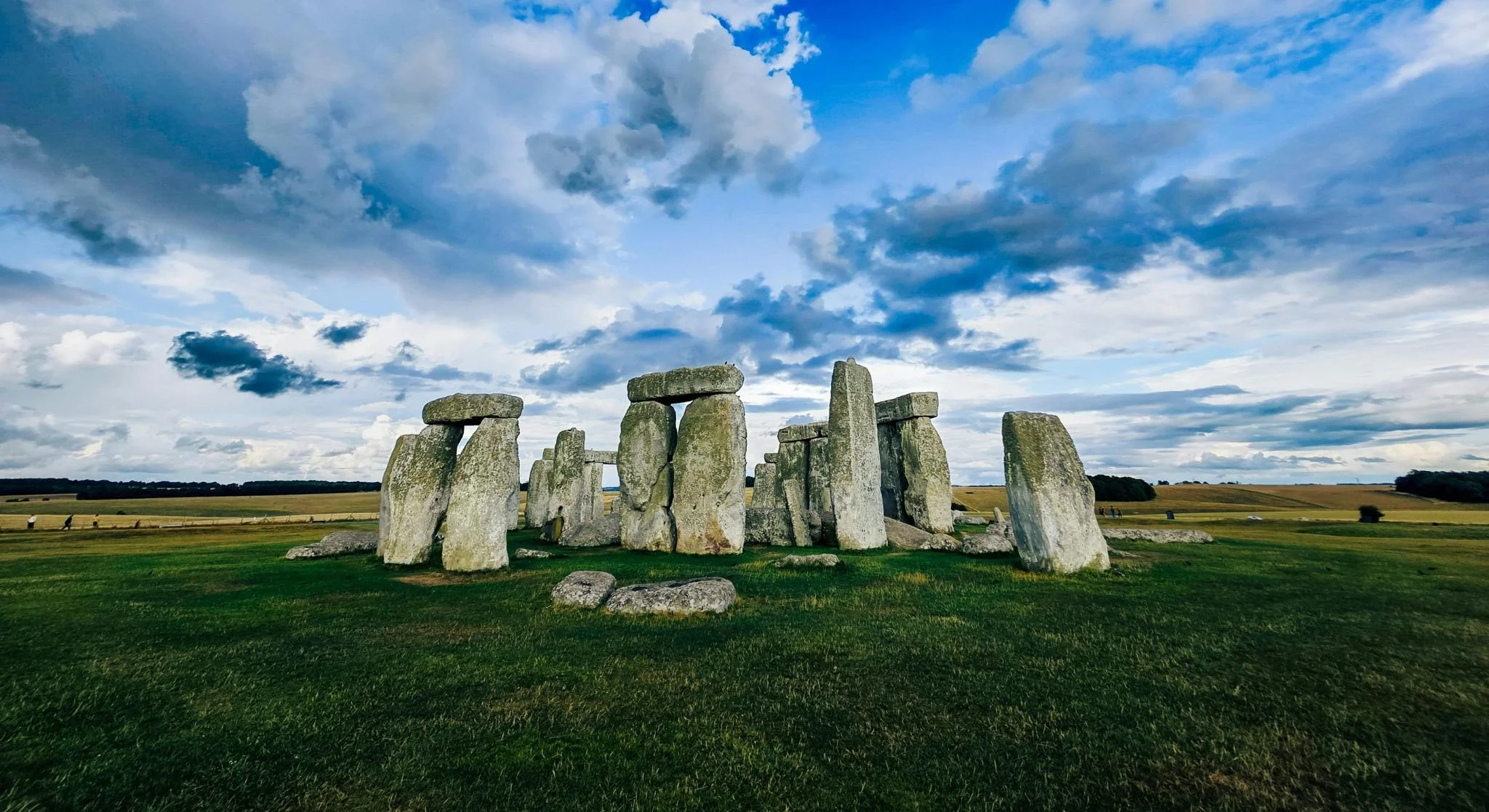
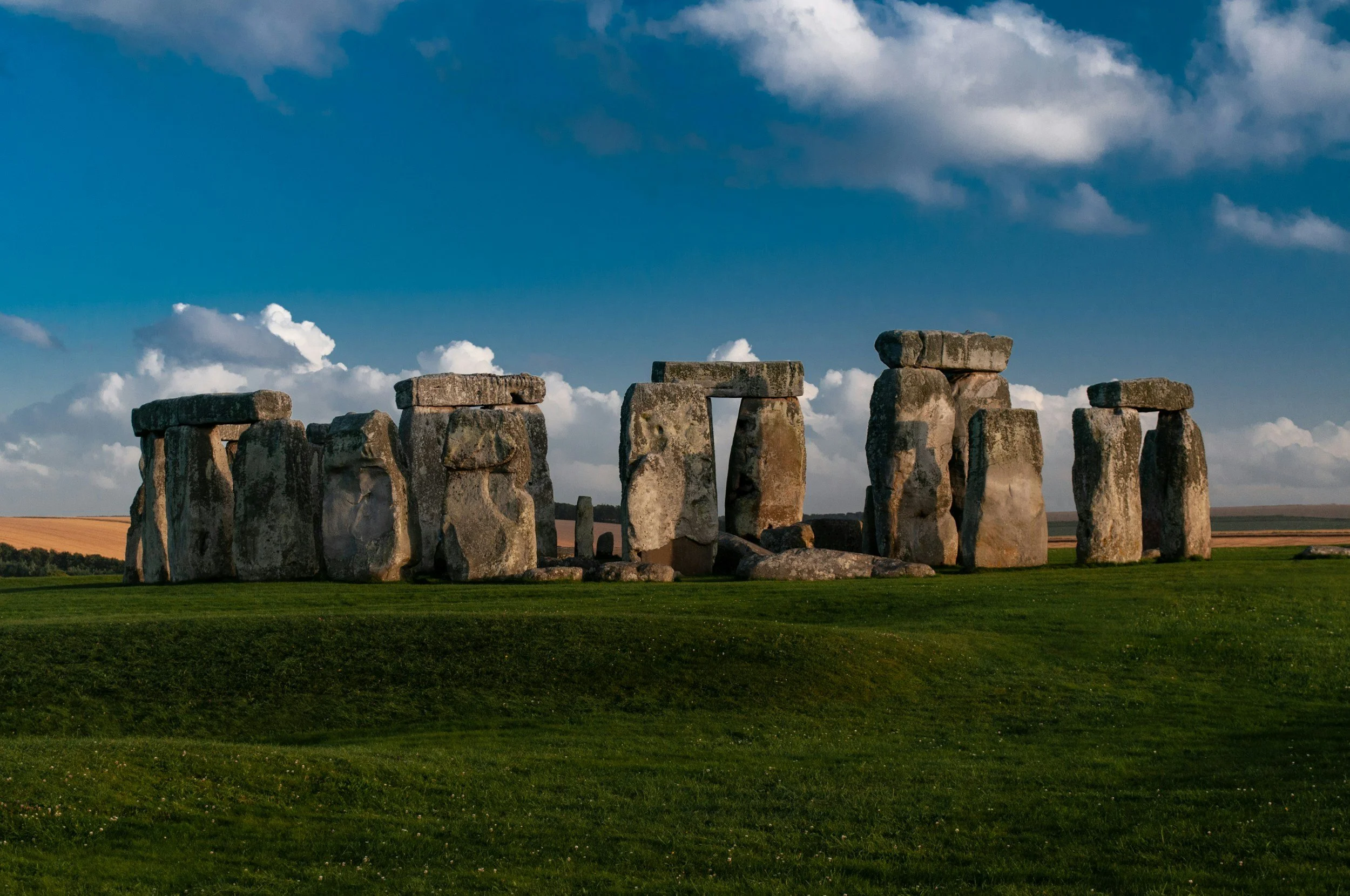
Stonehenge is the most studied prehistoric monument in the world, and yet it still doesn't give up its secrets easily. Standing on the open Salisbury Plain, the circle of massive sarsen stones commands the landscape in a way that photographs don't fully capture. Arriving privately — rather than off a group coach — means you approach it at your own pace and on your own terms.
Construction began in stages from around 3000 BCE, with the famous outer circle of sarsen stones — transported some 25 miles from the Marlborough Downs — raised into position over the following millennium. The smaller bluestones came from the Preseli Hills in south Wales, nearly 150 miles away. How those stones moved across that distance remains one of archaeology's genuinely open questions.
The monument's alignment with the summer and winter solstices is precise and deliberate. At midsummer, the rising sun strikes the Heel Stone and sends its shadow directly into the centre of the circle. Whatever Stonehenge was built for — ceremonial, astronomical, funerary, or all three — its builders understood the sky with extraordinary sophistication. The visitor centre's exhibition brings this into focus, with Neolithic artefacts, reconstructed faces of the people buried nearby, and the full story of the site's excavation history.
Most visitors don't realise Stonehenge was part of a far larger sacred landscape. Durrington Walls, the largest known henge monument in Britain, lies under a mile away. Woodhenge — a timber circle of similar age — sits just beyond it. Walking the perimeter of Stonehenge with this wider picture in mind changes how the place feels.
-
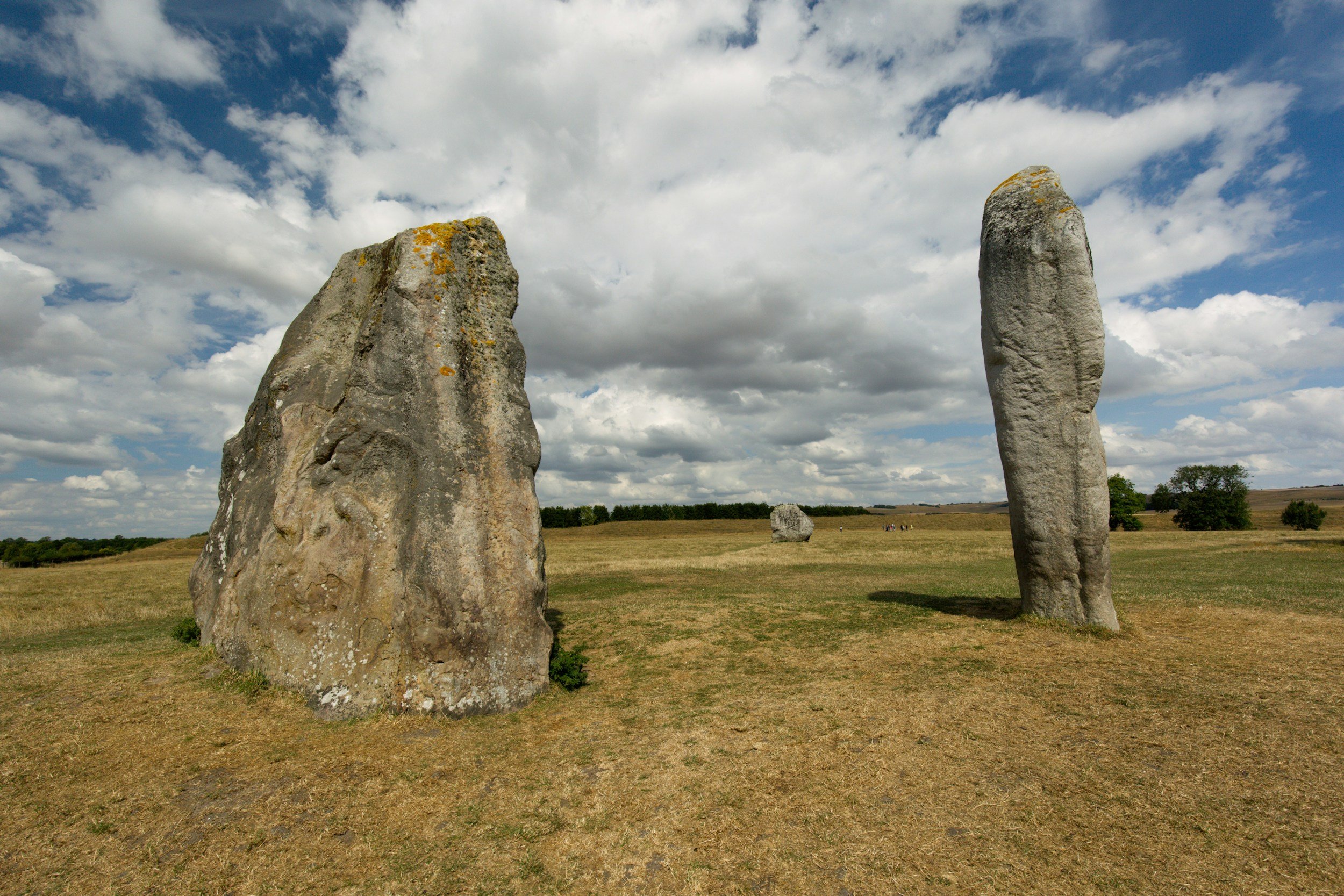
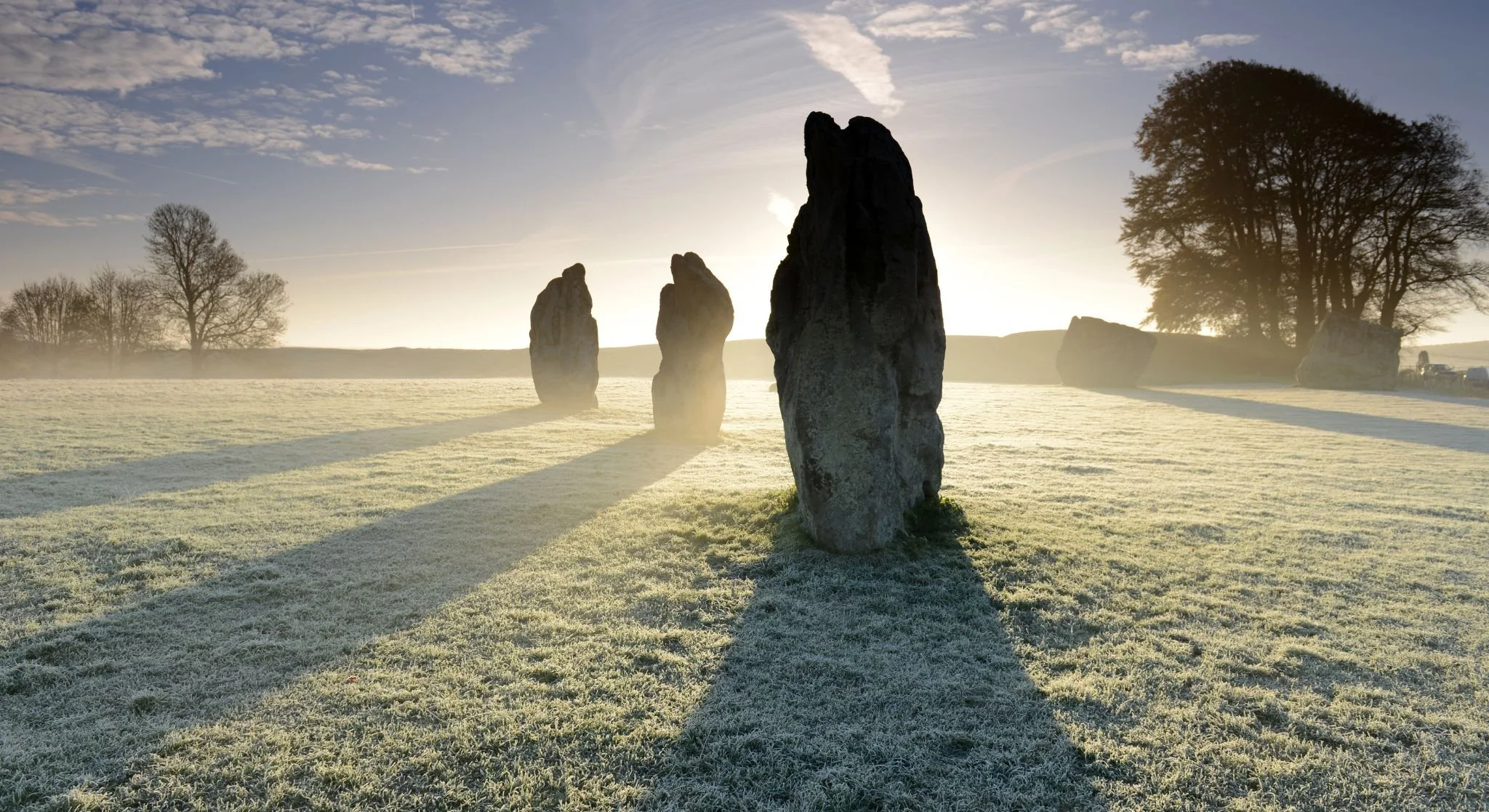
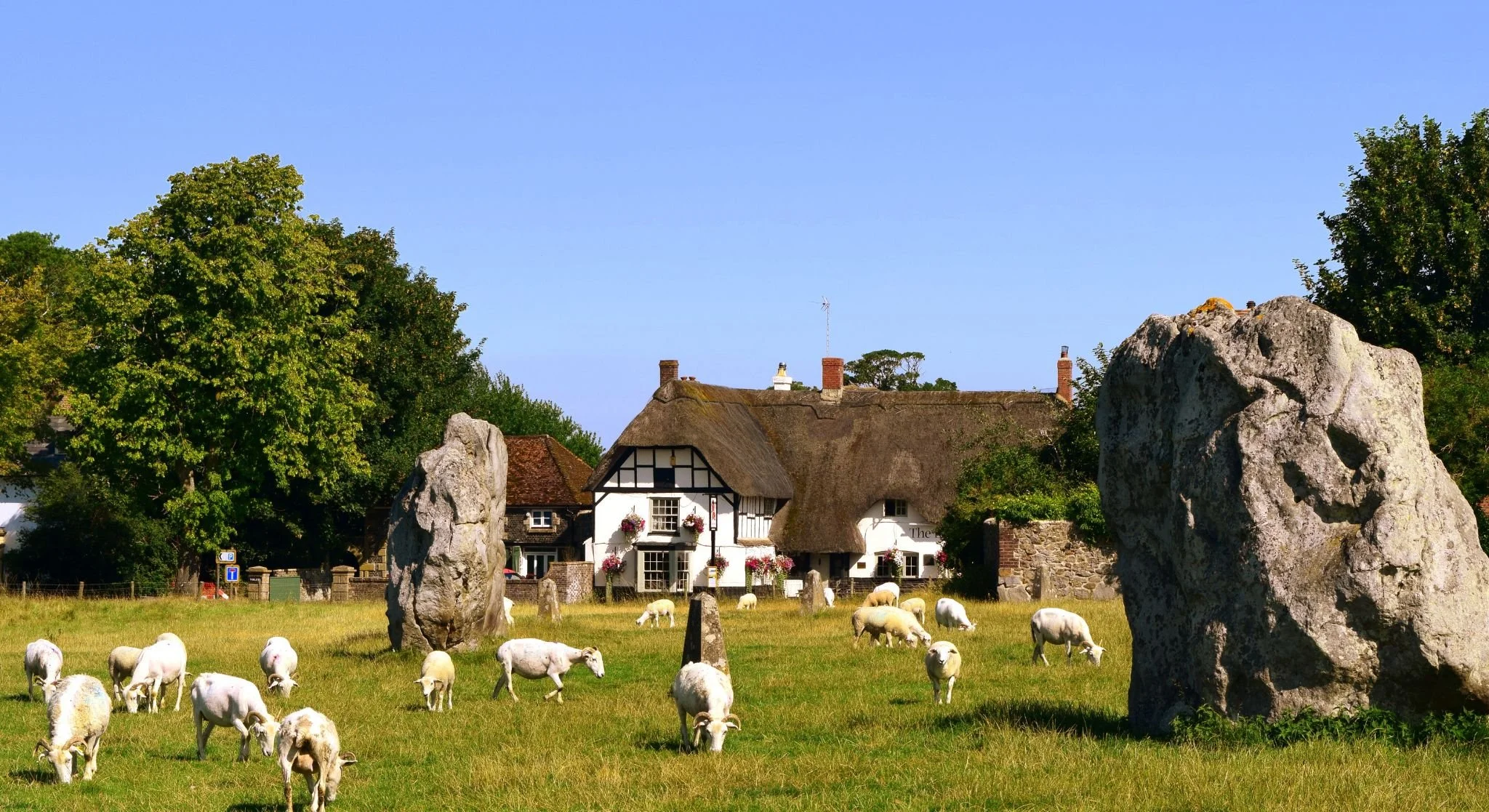
Avebury: Optional Stop
Between Stonehenge and the Uffington White Horse, a detour through Avebury adds an hour and rewards it generously. The stone circle at Avebury is larger than Stonehenge — the village of Avebury sits inside it — and unlike at Stonehenge, you can walk directly up to and touch the stones. There's no barrier, no viewing path, no managed distance. It's a completely different physical experience.
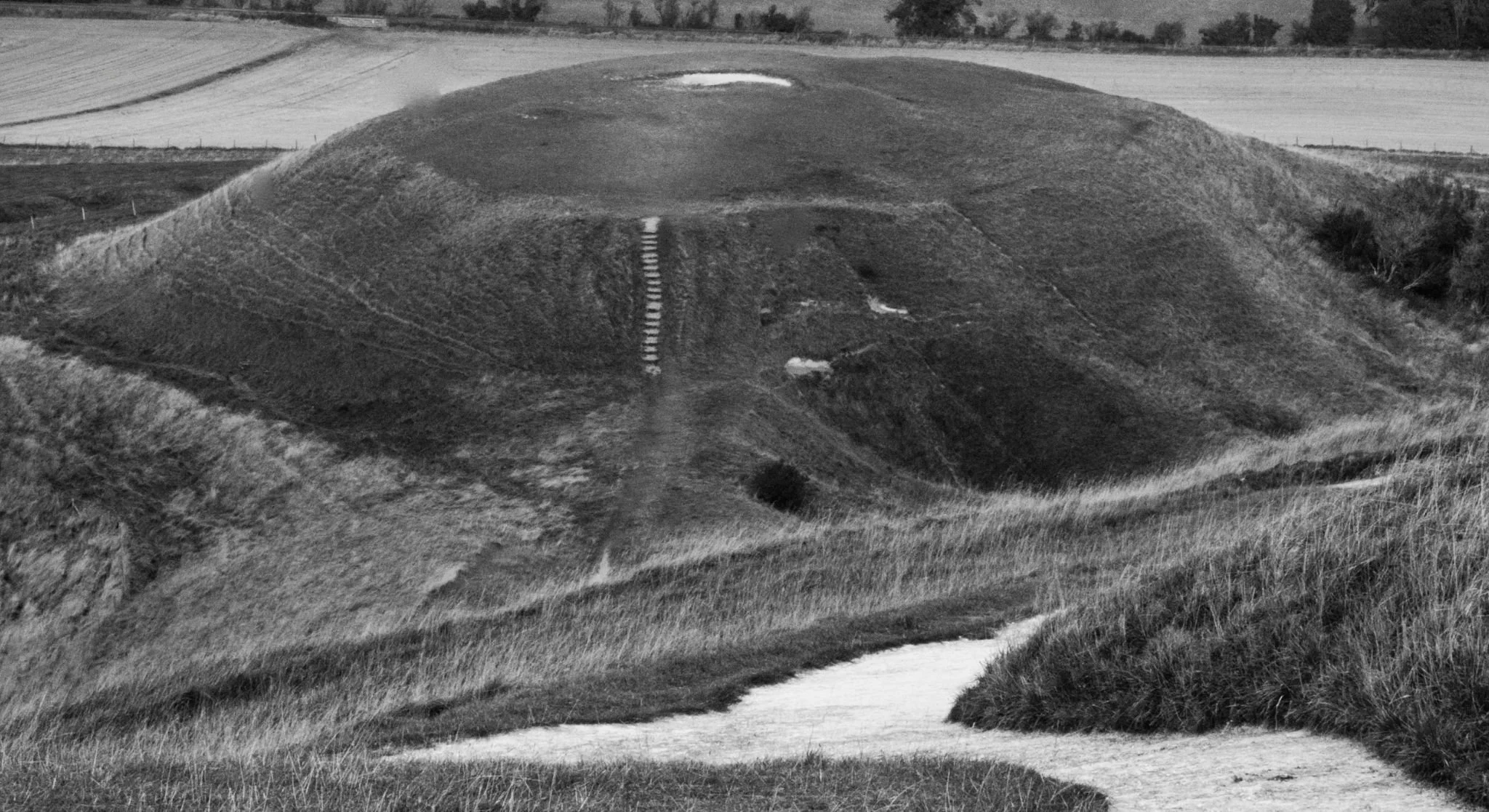
For guests interested in Neolithic Britain more broadly, the Avebury stop is one we recommend highly. The West Kennet Long Barrow, a chambered tomb constructed around 3650 BCE, is a short walk from the village and one of the finest megalithic monuments in the country.
The Stonehenge and Avebury tour combination adds around 90 minutes to the day and is easily accommodated within a 10-hour booking.
-
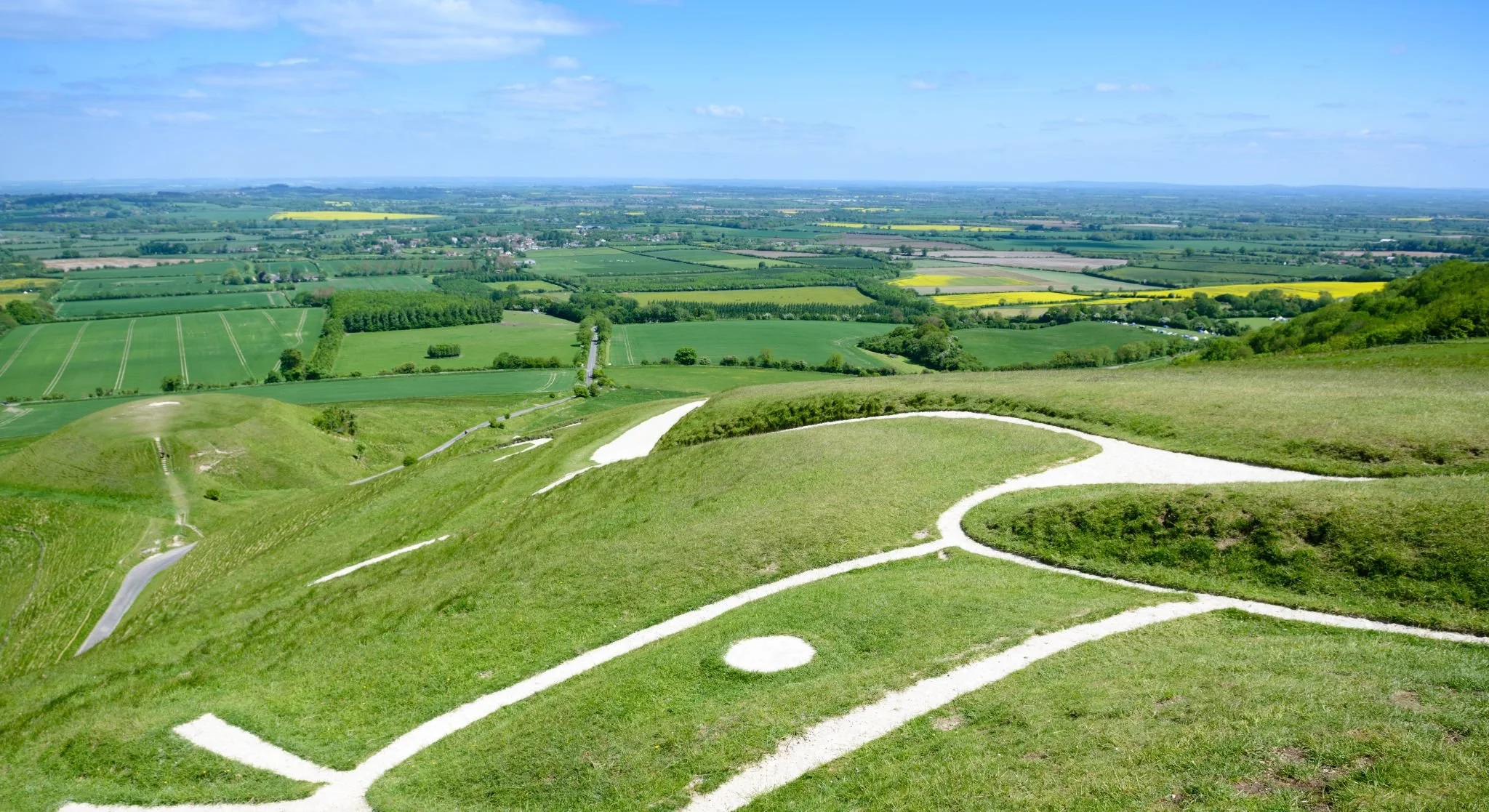
The Uffington White Horse
From the flat open plain of Wiltshire, the route climbs into the rolling chalk downland of Oxfordshire. White Horse Hill rises above the Vale of White Horse, and from the top — on a clear day — you can see for 30 miles in every direction. The chalk figure on its south-facing slope is 110 metres long and has been here for approximately 3,000 years.
The Uffington White Horse is the oldest of Britain's famous hill figures and the most abstract. Unlike the later, more literal horse carvings across the country, this one is stylised almost to the point of geometry — long, sweeping lines that suggest motion rather than describe an animal. It was almost certainly created during the late Bronze Age or early Iron Age, probably as a territorial or spiritual symbol for the communities living on the hill above. Whether it represents a horse, a dragon, or something without a modern word for it is still debated.
What's less debated is the extraordinary effort that kept it here. Chalk figures disappear under vegetation within decades if left untended. The White Horse has been maintained — scoured, weeded, and re-packed with fresh chalk — for roughly 30 centuries. Local communities held periodic scouring festivals to do this work, a tradition recorded as far back as the medieval period and continuing, in modified form, to this day.
Dragon Hill
At the foot of White Horse Hill sits Dragon Hill: a strange, flat-topped natural mound that local legend claims as the site where St George killed the dragon. The bare patch of chalk at its summit, where nothing grows, is where the dragon's blood supposedly fell. Geologically, it's a natural chalk outlier shaped by erosion. Mythologically, it's one of the most vividly named places in England.
Wayland's Smithy
A 20-minute walk west along the Ridgeway brings you to Wayland's Smithy, a Neolithic long barrow and chambered tomb constructed around 3590 BCE. The burial chamber is entered through a facade of tall standing stones, and the interior is accessible — you can step inside the passage and stand where people placed their dead over five thousand years ago. The Saxon myth that gave the site its name claimed that Wayland, the Norse god of smithcraft, lived here and would shoe your horse overnight if you left it tethered with a coin.
It is one of those places that earns its atmosphere without needing to exaggerate it.
Walking the Ridgeway
The ancient Ridgeway track connects all three sites — the White Horse, Dragon Hill, and Wayland's Smithy — along a chalk ridge that has been a thoroughfare since before the Bronze Age. The walking is moderate and the views across the Vale of White Horse are broad and uninterrupted. This is the most rewarding stretch of the day for photographers, particularly in the late afternoon when the chalk takes on a warm light. Comfortable footwear is strongly recommended.
The Day in Outline
Morning — London pickup & Stonehenge Your driver collects you from any central London address, hotel, or airport. The journey to Stonehenge takes roughly 90 minutes. You'll have ample time at the stones and the visitor centre exhibition before moving on.
Late morning — Avebury (optional) A recommended addition for anyone with a deep interest in Neolithic Britain. Walk among the stones, explore the village, and visit West Kennet Long Barrow if time allows.
Afternoon — White Horse Hill, Dragon Hill & Wayland's Smithy The route moves north-east into Oxfordshire. From the car park below the hill, a short walk brings you to the top. From there, the Uffington White Horse walks along the Ridgeway connect all three prehistoric sites at your own pace.
Evening — Return to London Your driver returns you to your chosen drop-off — hotel, home, or a different address entirely. Many guests ask to finish at a different location from where they started.
Duration: Up to 10 hours from pickup Pickup: Any central London address, Heathrow, Gatwick, Stansted, Luton, or London City Airport Group size: Up to 4 (saloon), up to 5 (MPV), up to 7 (8-seater minibus)
What Every Booking Includes
✅ Private vehicle — saloon, MPV, or 8-seater minibus; exclusively yours ✅ Door-to-door pickup and drop-off — from any London address or airport
✅ Up to 10 hours — vehicle and driver at your full disposal
✅ Fixed price confirmed at booking — no meters, no surges, no extras ✅ Free Wi-Fi on board — throughout the journey
✅ DBS-checked, TfL-licensed driver — professional and knowledgeable
✅ Executive upgrade available — Mercedes or BMW on request
✅ Flexible itinerary — add or remove stops at any point during the day ✅ Child seats — available on request
Frequently Asked Questions
-
Stonehenge is managed by English Heritage and requires timed entry tickets, which should be booked in advance through the English Heritage website. We recommend booking before your tour date. Admission is not included in the transfer price.
-
Yes, and we recommend it. The Stonehenge and Avebury tour combination is one of our most popular options. Adding Avebury extends the day by around 90 minutes and sits comfortably within a 10-hour booking. Just mention it when you enquire.
-
Reaching the White Horse from the car park below requires a moderate uphill walk of around 10–15 minutes. The Uffington White Horse walks along the Ridgeway to Wayland's Smithy are mostly flat chalk track, roughly 1.5 miles each way. Comfortable walking shoes with grip are recommended — the chalk can be slippery after rain.
-
Dragon Hill is a flat-topped natural chalk mound directly below the White Horse. Local legend identifies it as the site where St George killed the dragon, and the bare chalk patch at its summit — where grass won't grow — is said to mark where the dragon's blood spilled. It takes about five minutes to walk up and makes a striking vantage point for photographing the White Horse above.
-
Wayland's Smithy is a Neolithic chambered long barrow, constructed around 3590 BCE, located about a mile west of the White Horse along the Ridgeway. You can enter the burial chamber through the standing stone facade. Its name comes from a Saxon legend in which Wayland, the smith god, would shoe a horse left overnight with a coin. It's accessible on foot from White Horse Hill and adds around 45 minutes to the afternoon.
-
The golden hour before sunset gives the most dramatic light at Stonehenge, with long shadows stretching across the stones. Because this is a private tour, your pickup time can be adjusted to allow for late afternoon arrival at the stones if photography is a priority — just mention this when booking.
-
Yes. We offer pickup from Heathrow, Gatwick, Stansted, Luton, and London City Airport. Many guests book a private tour to Stonehenge from London as their first day activity after landing, combining the airport transfer with a full-day excursion before checking in.
-
Yes, though it is a long day with significant time outdoors. Stonehenge and White Horse Hill both hold up well with curious children. Child seats are available on request and charged at the time of booking — please provide the age and weight of each child when enquiring so the correct seat can be fitted.