
EES at London Airports — What It Means for Your Journey and Your Transfer
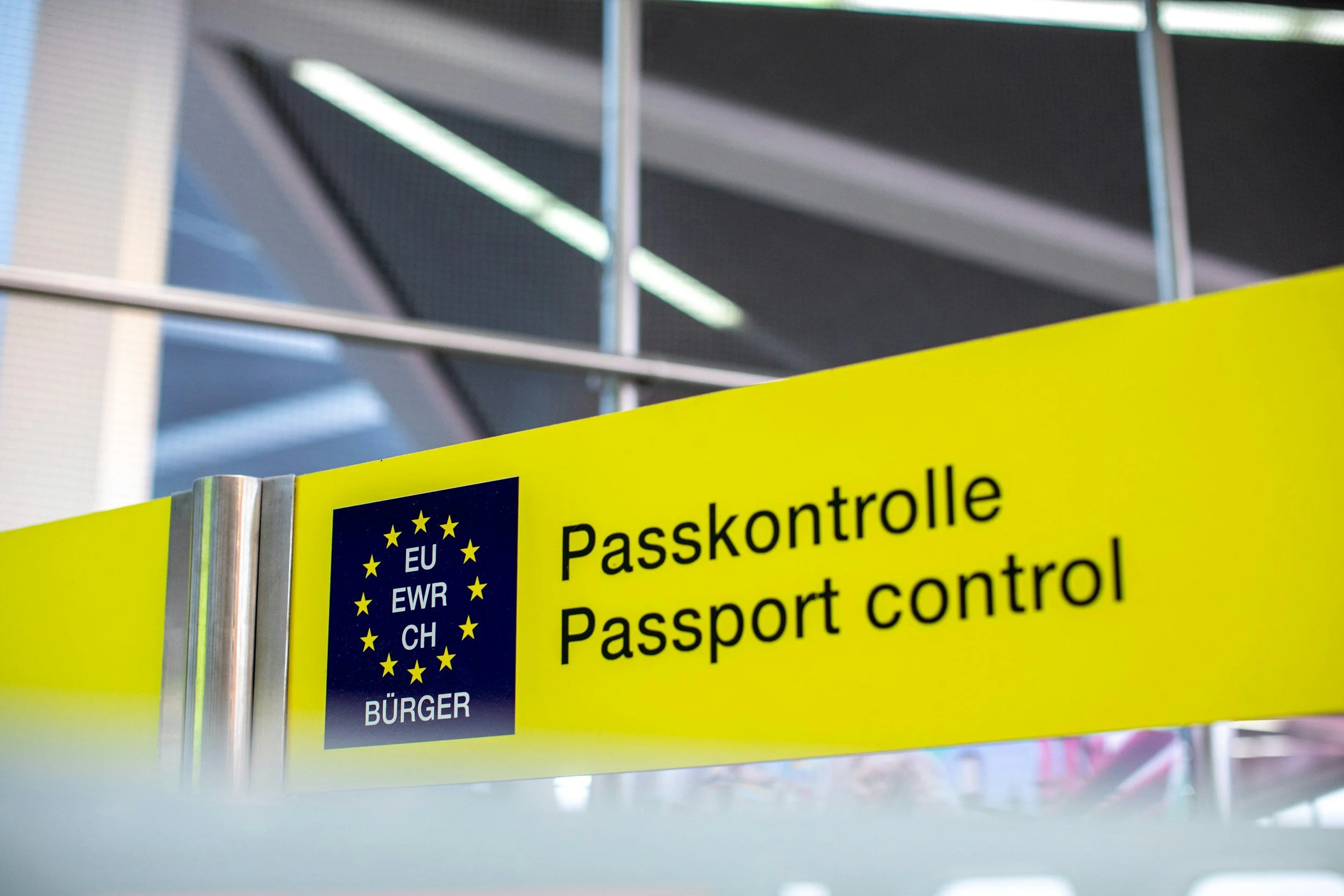
The EU's Entry/Exit System is now fully operational. If you are travelling between the UK and Europe through Heathrow or Gatwick, the queues are longer than they used to be — and this guide explains exactly what to expect and how to plan around it.
Published April 2026. Updated regularly as conditions at Heathrow and Gatwick develop.
What Is the EES?
The European Entry/Exit System (EES) is a new EU border management system that replaces manual passport stamping with digital biometric registration. Every time a non-EU national enters or exits the Schengen Area, the system captures:
A facial scan matched to the chip in your passport
Four fingerprints from your right hand
A digital record of your entry and exit date
This data is stored centrally across all 29 Schengen countries. The system also automatically tracks the 90/180-day rule — the limit on how long British and other non-EU nationals can spend in the Schengen Area within any rolling 180-day window.
For UK travellers departing to Europe from Heathrow or Gatwick, this means an additional step at the departure gate or security zone before boarding your flight. For international visitors arriving into the UK, the EES does not apply to UK entry — it applies when you subsequently travel into Europe from a UK airport.
Why Are Queues Longer at Heathrow and Gatwick?
The short answer: the first-time registration process takes significantly longer than a traditional passport check.
A standard passport check takes approximately 25 seconds per person. A first-time EES biometric registration — capturing fingerprints and a facial scan, cross-referencing against your passport chip, and creating a new digital record — takes on average 90 to 120 seconds under normal conditions. For a large wide-body aircraft arriving from New York or Dubai with 300 passengers, the majority of whom are registering for the first time, the cumulative processing time is several hours of additional queue time.
At Heathrow, the morning transatlantic arrival window — roughly 06:00 to 09:00 — sees multiple large aircraft land simultaneously. Terminal 2 (Star Alliance: United, Lufthansa, Air Canada), Terminal 3 (Virgin Atlantic, American Airlines, Cathay Pacific), Terminal 4 (Emirates, Qatar Airways, Korean Air), and Terminal 5 (British Airways) all process high volumes of first-time registrants during this window.
At Gatwick, the North Terminal — which handles the bulk of easyJet's European leisure routes — has become the most congested point for departing passengers requiring EES processing.
There are also occasional hardware issues: early reports suggest a small percentage of kiosks experience facial scan matching errors, forcing passengers to move to manual desks. This adds further unpredictability to already congested queues.
✅ What This Means If You Have a Pre-Booked Transfer Waiting
If someone is collecting you from the airport — whether a friend, a taxi, or a pre-booked private hire driver — the single most important thing EES changes is your time from landing to exit.
The average time from wheels-down to clearing the terminal at Heathrow has increased significantly since EES went live. During peak windows, first-time registrants should expect 45 to 90 minutes additional time before reaching the arrivals hall, on top of normal passport control and baggage reclaim.
This is precisely why UK Airport Transfer Services includes 30 minutes free waiting from your selected pickup buffer. When you book with us, you choose how much time you need after landing before your driver is at the terminal. If EES adds time to your exit — as it commonly does during peak hours — you simply select a more generous buffer at the time of booking. Your driver arrives at your confirmed pickup time and waits. There is no charge for a delay caused by EES processing. Your price does not change.
The transfer is the one part of your journey that adapts to the airport — not the other way around.
Book a fixed-price airport transfer — your driver waits regardless of EES delays →
How Much Extra Time Should You Allow?
This depends on your passport, your route, and your terminal. Here is the practical picture:
British passport holders travelling to the Schengen Area: You are classified as a third-country national for EES purposes and must complete biometric registration before boarding. At departure, allow an extra 45 to 60 minutes on top of your standard check-in and security time. The 4-hour arrival guidance from some airlines reflects the worst-case scenario during peak morning queues. Off-peak departures (late evening and overnight) typically have shorter EES queues.
International visitors arriving into the UK from the Schengen Area: EES does not apply to entering the UK. UK border control is separate. However, if you then travel onward from the UK to another Schengen country, EES will apply at your next EU entry point.
British citizens who have not yet registered: Your first EES registration is the slowest. Subsequent entries only require a facial scan — approximately 10 to 15 seconds. The queue slowdown is primarily a first-timer phenomenon that will ease as more passengers complete initial registration.
Families: Children under 12 are exempt from fingerprinting but must still complete a facial scan. Parents assisting children with kiosk interfaces add time. If you are travelling as a family, build extra buffer into your departure schedule.
The 90/180-Day Rule — Now Automatically Enforced
One of the more significant changes for British travellers spending extended time in Europe is the automatic enforcement of the 90-day rule.
Previously, tracking your Schengen days involved counting faint ink stamps across passport pages — a system that border officials sometimes applied inconsistently. EES removes all discretion. The moment your passport is scanned at any Schengen entry point, the system calculates your remaining days automatically, drawing on your full digital entry and exit history across all 29 member states.
If you enter France having already spent 85 days in the Schengen Area in the past 180 days, the system will flag this instantly. There is no arguing with an algorithm.
The consequences for overstaying are significant: fines, recorded deportations, and re-entry bans are all outcomes that have been applied in early enforcement cases. The key points to understand:
The 90-day limit is rolling, not calendar-based. It counts backward 180 days from the date of each entry. Days spent in Ireland, the UK, and non-Schengen EU countries (Bulgaria, Romania, Croatia) do not count toward your 90-day allowance.
The "Travel to Europe" app — developed by Frontex and available on iOS and Android — lets you see your own EES record, including remaining days in your current window. You can also pre-submit passport details and a facial image up to 72 hours before arrival, which reduces your physical processing time at the kiosk. This is worth doing before any trip to the Schengen Area from a UK airport.
Practical Tips for Departing Through Heathrow or Gatwick
These are the things that make a concrete difference to your experience at the airport:
Arrive earlier than you think you need to. For peak morning departures to European destinations, arriving 3.5 to 4 hours before your scheduled departure time is a sensible buffer until EES processing speeds stabilise further. This is not universal advice — off-peak departures in the late evening are typically much faster — but for mid-morning Gatwick easyJet departures and early Heathrow European services, it currently holds.
Use the "Travel to Europe" app before you fly. Pre-submitting your passport data and selfie does not remove the fingerprint step, but it creates a digital pre-profile that reduces your time at the physical kiosk. Many passengers who have done this report noticeably shorter processing times.
Go straight to the EES zone after security. Airport authorities at both Heathrow and Gatwick advise clearing your EES registration before stopping at duty free, shops, or restaurants. If a queue builds while you are browsing, you will be at the back of it.
Book your evening or overnight flights if flexibility allows. EES queues at Gatwick and Heathrow are consistently shorter between approximately 21:00 and 05:30. If your schedule has any flexibility, later departures currently offer a smoother experience.
For arrivals being collected: choose a generous pickup buffer when booking. The EES processing time at arrival is less predictable than standard passport control, and the buffer you select at booking determines when your driver arrives at the terminal. Choosing 75 to 90 minutes rather than 45 minutes on a peak morning transatlantic arrival is the simplest way to ensure your driver is not waiting when you are still in a queue.
Does EES Affect My Airport Transfer?
Only in terms of timing — and that is entirely manageable.
EES does not affect the transfer journey itself. Your vehicle, your driver, your route, and your fixed price are all unaffected. What EES does affect is the time it takes to exit the terminal on arrivals — which directly influences the pickup buffer you should select.
If you are arriving at Heathrow Terminal 3 on a Virgin Atlantic transatlantic service at 07:00 and are a first-time EES registrant, selecting a 45-minute buffer is likely too tight. Selecting 75 to 90 minutes is more realistic for peak morning conditions.
When you book with UK Airport Transfer Services:
You choose your buffer time at the point of booking
Your driver arrives at the terminal at your confirmed pickup time
If you exit faster than expected, contact your driver directly — they can often adjust
If EES processing takes longer than your buffer, the 30 minutes free waiting from your confirmed pickup time covers a reasonable additional delay
Your price does not change for delays caused by EES or any other queue
The transfer is the controllable part of your journey. Book it in advance, choose a sensible buffer, and the rest adapts around you.
Get a fixed-price quote for your Heathrow or Gatwick transfer →
FAQ
-
EES applies to travel into the Schengen Area — it does not apply to entering the UK. UK border control is separate and has not changed for EU or non-EU nationals. If you are arriving into the UK from a non-Schengen country, EES does not affect your UK arrival at all.
-
Yes. British passport holders are classified as third-country nationals for Schengen purposes and must complete EES biometric registration on their first entry into the Schengen Area. This applies at departure from UK airports (Heathrow, Gatwick, Stansted, Luton) before boarding any flight to a Schengen destination, and at arrival when crossing into Schengen from outside.
-
First-time registration — four fingerprints and a facial scan — takes approximately 90 to 120 seconds under ideal conditions. Environmental factors (dry skin affecting fingerprint reads), crowded kiosks, and occasional hardware issues can extend this. Once registered, subsequent entries require only a facial scan of approximately 10 to 15 seconds.
-
Yes. When you book with UK Airport Transfer Services, you select a pickup buffer at booking. Your driver arrives at your confirmed pickup time and waits 30 minutes free from that point. If you need to extend your buffer to account for EES delays, simply select a longer buffer at the time of booking — your price is fixed regardless of the buffer length you choose.
-
British and other non-EU nationals may spend a maximum of 90 days in the Schengen Area within any rolling 180-day period. Previously, this was tracked by passport stamps and was enforced inconsistently. EES enforces it automatically and with complete accuracy across all 29 Schengen countries. Overstaying — even by a single day — can result in fines, a recorded deportation, and re-entry bans.
-
It helps in two ways. First, pre-submitting your passport data and a facial image reduces your physical processing time at the kiosk — you still need to provide fingerprints in person, but the profile creation step is already done. Second, it shows your remaining Schengen days in real time, which is genuinely useful if you spend extended periods in Europe.
-
Heathrow is the most affected overall due to its volume of transatlantic and international arrivals. During the morning peak (06:00–09:00), Terminals 2, 3, and 5 see the heaviest queues. At Gatwick, the North Terminal is the busiest departure point for EES processing given easyJet's European route volume. Stansted and Luton see less congestion due to lower volumes of first-time registrants.
Travelling Through Heathrow or Gatwick?
If you are arriving at a London airport — particularly on a transatlantic or long-haul service — and need a transfer to Central London, a hotel, or onward to another destination, a pre-booked private hire transfer removes the one variable you cannot control at the airport (EES queue time) from affecting the rest of your journey.
Your driver monitors your flight, arrives at your terminal at your confirmed time, and waits. Your ground transport adapts to the airport. Not the other way around.
Book a fixed-price transfer from Heathrow or Gatwick →
Or read our terminal guides: Heathrow T2 · Heathrow T3 · Heathrow T4 · Heathrow T5 · Gatwick Airport Guide
Need a transfer to or from a London airport?
Fixed-price private hire from Heathrow, Gatwick, Stansted, Luton and London City Airport — door to door, free flight monitoring, no hidden fees.
Get a quote →